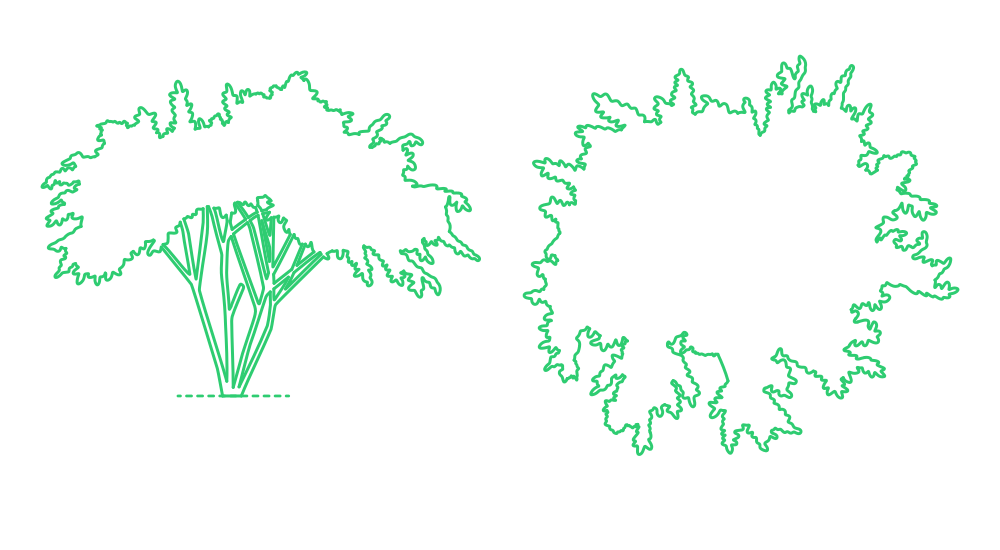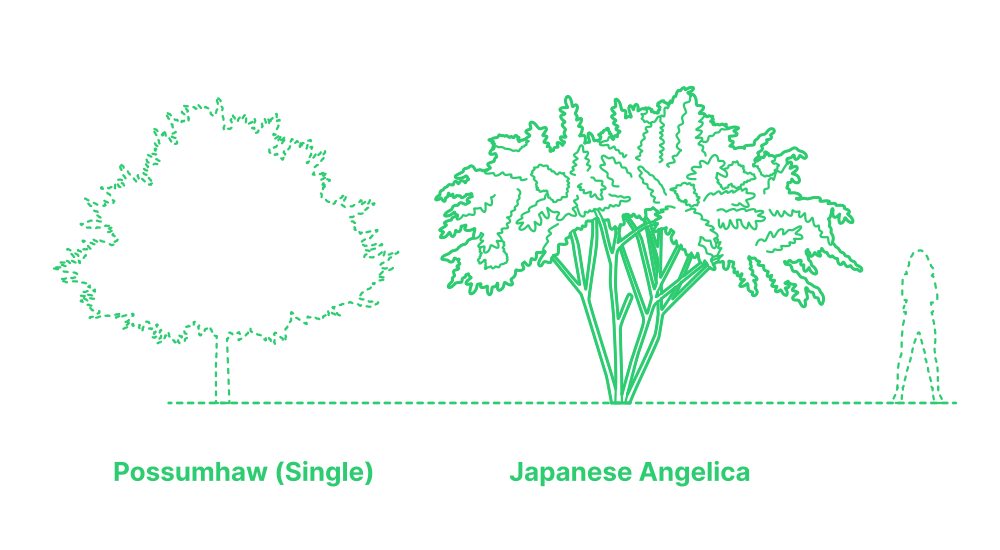
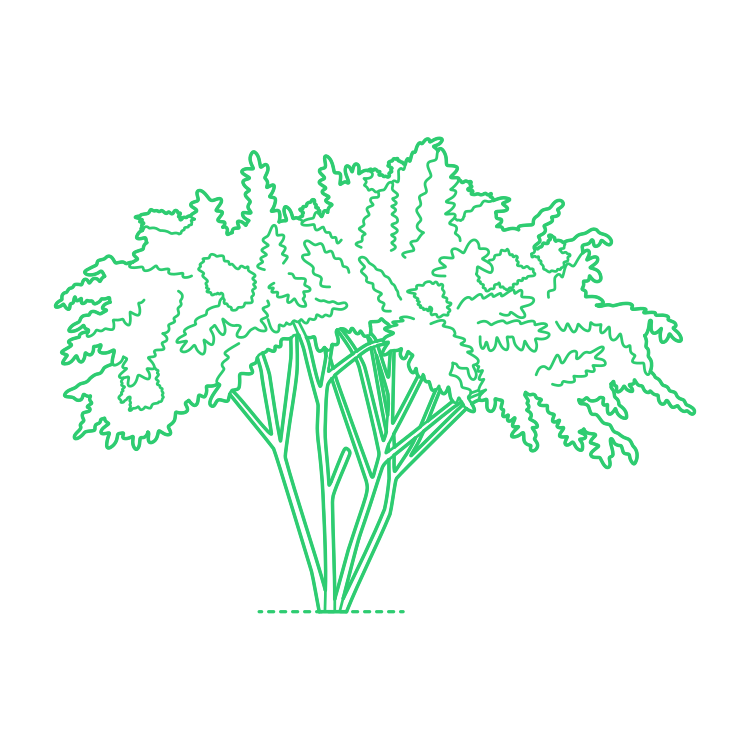
Japanese angelica (Aralia elata) is a deciduous woody perennial with a bold, upright presence defined by thick, sparsely branched stems and a strongly architectural form. The stems are often unbranched for long stretches, terminating in large, compound leaves that create a dramatic, umbrella-like canopy during the growing season. Also known as Japanese spikenard or devil’s walking stick, Aralia elata is native to East Asia, including Japan, China, and Korea, where it inhabits forest margins, clearings, and disturbed woodland sites.
A notable biological trait is its tendency to form colonies through root suckering, allowing multiple upright stems to emerge over time. The plant is also characterized by spiny stems, an adaptation thought to reduce browsing pressure. Its structural growth habit, seasonal transformation, and capacity for clonal expansion distinguish Aralia elata as a shrub that visually bridges herbaceous and tree-like forms.
Japanese Angelica has a typical overall cultivated height between 12’-20’ (3.66-6.1 m), maximum wild height between 30’-40’ (9.14-12.19 m), and spread diameter of 10’-30’ (3.05-9.14 m).
Japanese angelica (Aralia elata) is a deciduous woody perennial with a bold, upright presence defined by thick, sparsely branched stems and a strongly architectural form. The stems are often unbranched for long stretches, terminating in large, compound leaves that create a dramatic, umbrella-like canopy during the growing season. Also known as Japanese spikenard or devil’s walking stick, Aralia elata is native to East Asia, including Japan, China, and Korea, where it inhabits forest margins, clearings, and disturbed woodland sites.
A notable biological trait is its tendency to form colonies through root suckering, allowing multiple upright stems to emerge over time. The plant is also characterized by spiny stems, an adaptation thought to reduce browsing pressure. Its structural growth habit, seasonal transformation, and capacity for clonal expansion distinguish Aralia elata as a shrub that visually bridges herbaceous and tree-like forms.
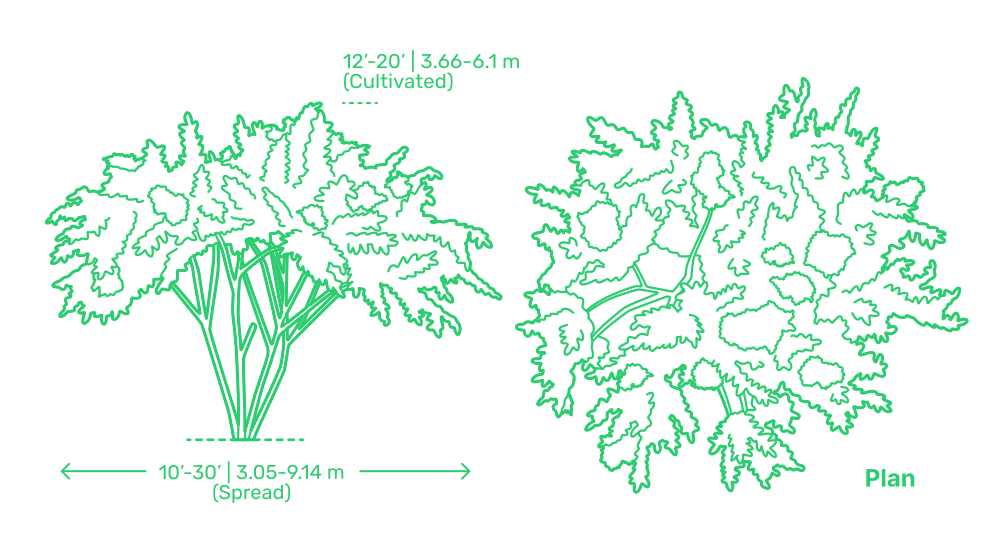
Japanese Angelica has a typical overall cultivated height between 12’-20’ (3.66-6.1 m), maximum wild height between 30’-40’ (9.14-12.19 m), and spread diameter of 10’-30’ (3.05-9.14 m).