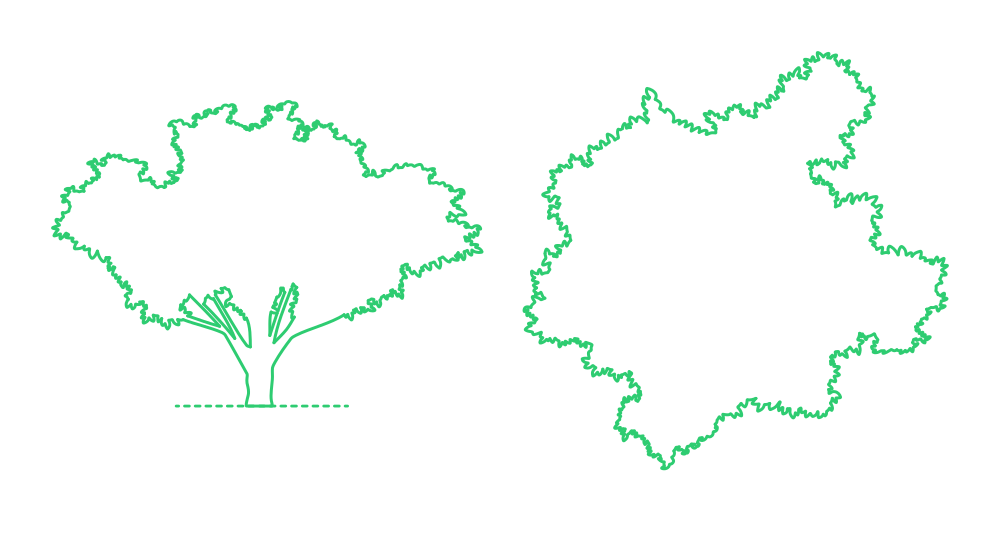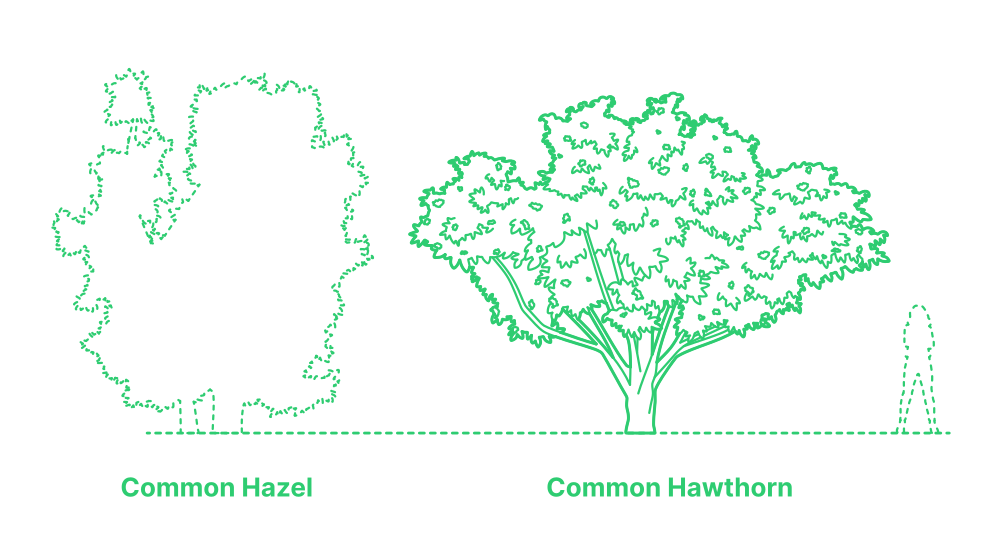
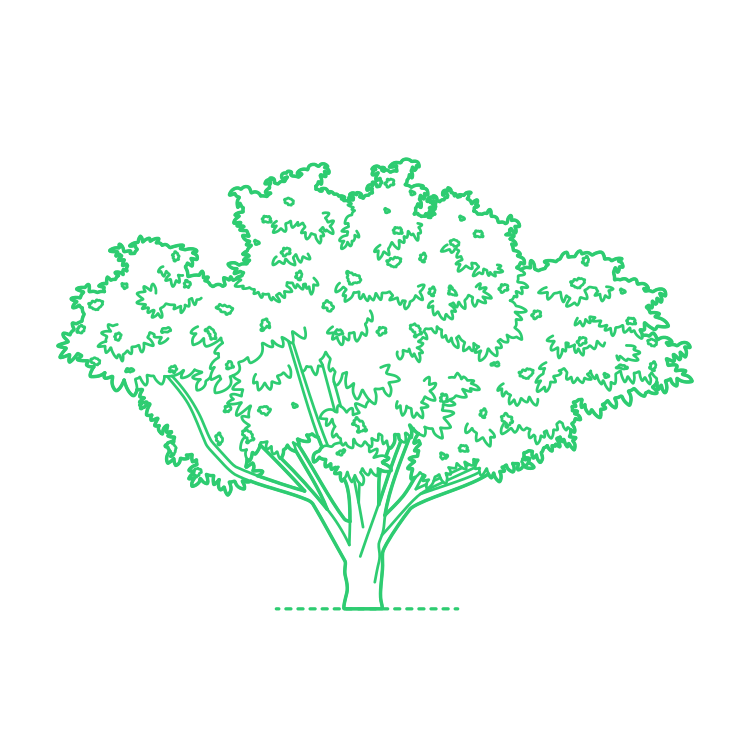
Common hawthorn (Crataegus monogyna) is a woody perennial that develops as a dense, branching shrub or small tree with a thorny framework. The stems and branches are rigid and often armed with sharp spines, creating a protective structure. Leaves are lobed and arranged alternately, contributing to a textured canopy during the growing season.
Also known as single-seed hawthorn, Crataegus monogyna is native to Europe and western Asia and thrives in hedgerows, grasslands, and woodland edges. The species is notable for its tolerance of poor soils and exposure, as well as its longevity. Biologically, hawthorn produces flowers followed by small fruits that support wildlife. Its dense branching and defensive traits reflect an evolutionary strategy focused on resilience, protection, and persistence in open and transitional habitats.
Common Hawthorn has a typical overall height between 10’-30’ (3.05-9.14 m) and spread diameter of 15’-25’ (4.57-7.62 m).
Common hawthorn (Crataegus monogyna) is a woody perennial that develops as a dense, branching shrub or small tree with a thorny framework. The stems and branches are rigid and often armed with sharp spines, creating a protective structure. Leaves are lobed and arranged alternately, contributing to a textured canopy during the growing season.
Also known as single-seed hawthorn, Crataegus monogyna is native to Europe and western Asia and thrives in hedgerows, grasslands, and woodland edges. The species is notable for its tolerance of poor soils and exposure, as well as its longevity. Biologically, hawthorn produces flowers followed by small fruits that support wildlife. Its dense branching and defensive traits reflect an evolutionary strategy focused on resilience, protection, and persistence in open and transitional habitats.
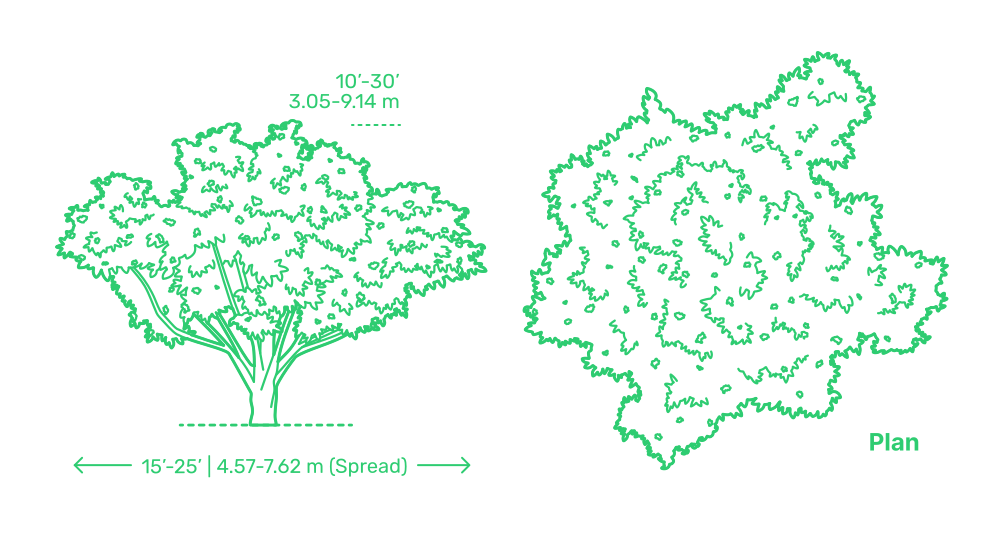
Common Hawthorn has a typical overall height between 10’-30’ (3.05-9.14 m) and spread diameter of 15’-25’ (4.57-7.62 m).