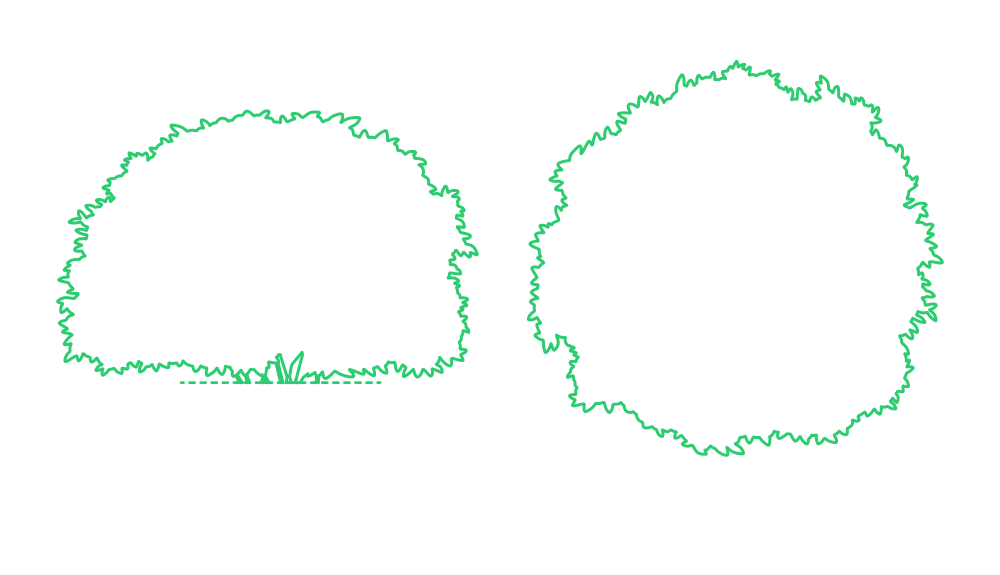
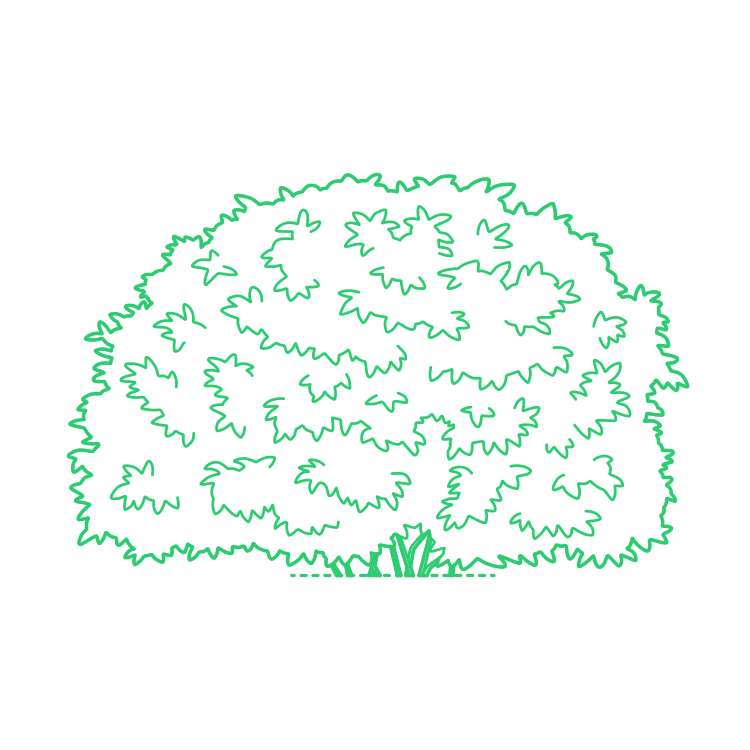
Siberian dogwood (Cornus alba) is a deciduous woody perennial recognized for its upright stems and strong seasonal contrast. The plant forms a dense cluster of smooth, straight branches that emerge from the base and spread outward slightly as they mature. Leaves are simple and oval during the growing season, but the species is especially notable for its vivid stem coloration once foliage is shed.
Native to northern Asia and parts of eastern Europe, Cornus alba thrives in cold climates and moist habitats such as riverbanks and forest edges. A key biological trait is its exceptional cold hardiness and ability to regenerate vigorously from the base. The plant often spreads gradually through new stem production, reinforcing its presence over time. Siberian dogwood’s structural clarity and seasonal transformation make it a distinctive shrub adapted to environments with strong climatic variation.
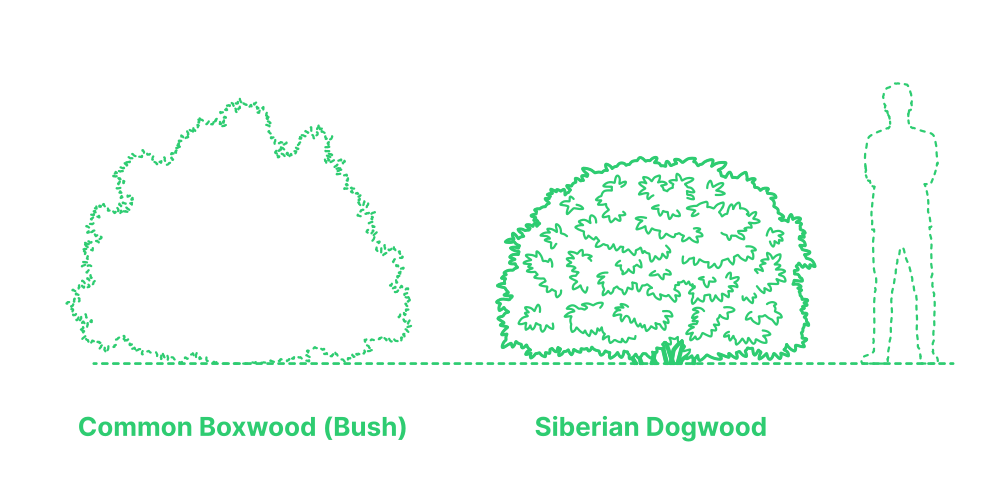
Siberian Dogwood has a typical overall height between 4’-8’ (1.22-2.44 m) and spread diameter of 5’-8’ (1.52-2.44 m).
Siberian dogwood (Cornus alba) is a deciduous woody perennial recognized for its upright stems and strong seasonal contrast. The plant forms a dense cluster of smooth, straight branches that emerge from the base and spread outward slightly as they mature. Leaves are simple and oval during the growing season, but the species is especially notable for its vivid stem coloration once foliage is shed.
Native to northern Asia and parts of eastern Europe, Cornus alba thrives in cold climates and moist habitats such as riverbanks and forest edges. A key biological trait is its exceptional cold hardiness and ability to regenerate vigorously from the base. The plant often spreads gradually through new stem production, reinforcing its presence over time. Siberian dogwood’s structural clarity and seasonal transformation make it a distinctive shrub adapted to environments with strong climatic variation.
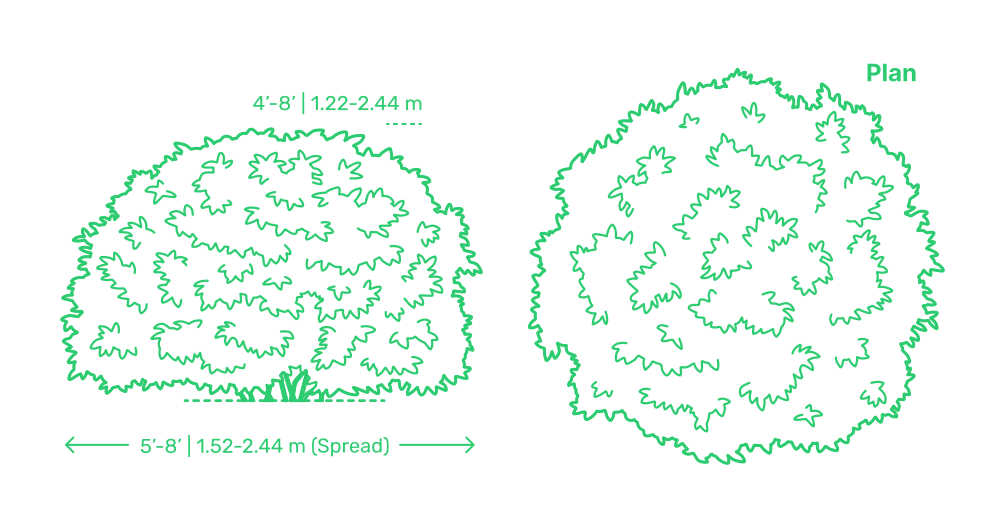
Siberian Dogwood has a typical overall height between 4’-8’ (1.22-2.44 m) and spread diameter of 5’-8’ (1.52-2.44 m).