Morning Glory (Wall, Group, Roots) (Ipomoea purpurea)
Morning Glory (Wall, Group, Roots) (Ipomoea purpurea)
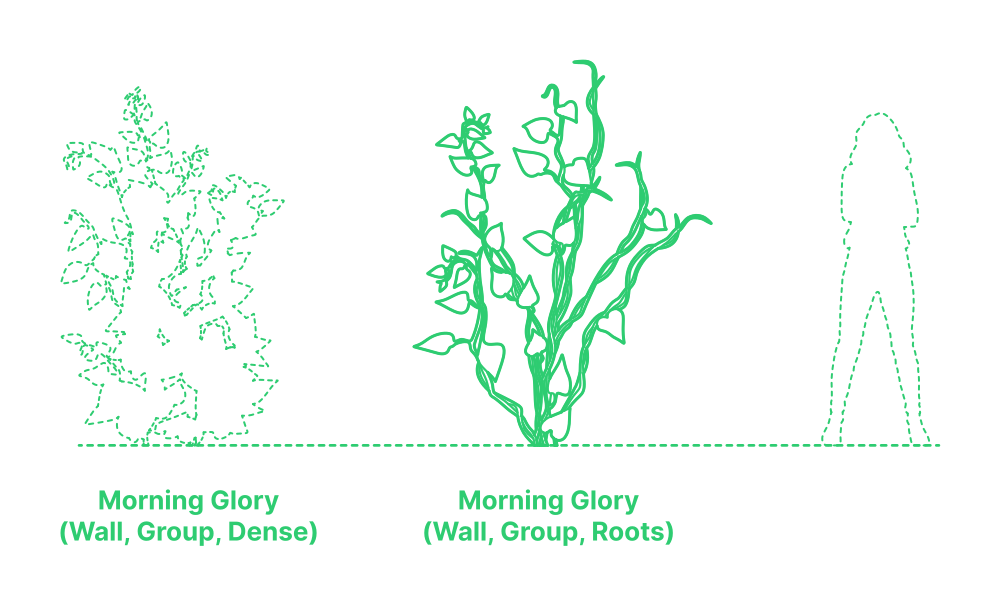

Morning Glory (Ipomoea purpurea) in a wall group–roots form is characterized by multiple climbing stems growing in close association while exhibiting reduced foliage development and suppressed flowering. In this expression, the vines prioritize structural attachment over leaf and flower production, with stems pressing closely against vertical surfaces. Adventitious roots may develop intermittently along the stems at contact points, contributing to localized anchoring rather than true climbing support. Leaves, when present, are sparse, smaller, or irregularly spaced, and floral structures are typically absent.
This growth form can occur in shaded, constrained, or competitive conditions where light availability is limited and resources are directed toward attachment and persistence rather than reproduction. Ipomoea purpurea originates from warm regions of the Americas and commonly occupies disturbed habitats; however, in this rooted wall-group state, its usual vigorous leaf expansion is reduced. The form highlights the species’ physiological flexibility and its ability to persist vertically under suboptimal conditions by reallocating growth energy toward stem elongation and surface adherence.
Morning Glory (Wall, Group, Roots) has a typical overall vine length/height between 6’-15’ (1.83-4.57 m) and spread of 2’-6’ (.61-1.83 m). The leaf width is between 2”-5” (5-12.7 cm).
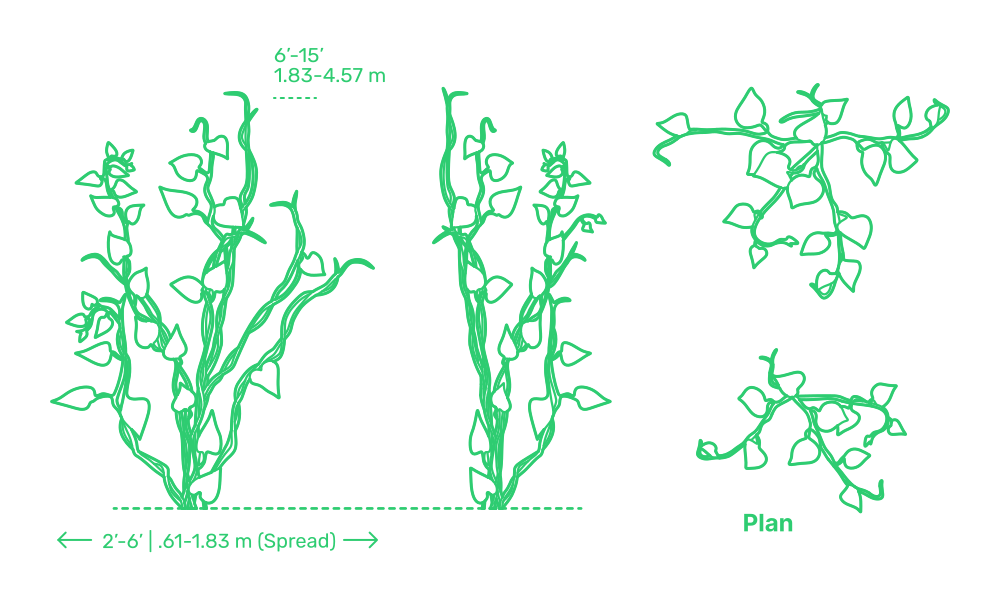
Morning Glory (Ipomoea purpurea) in a wall group–roots form is characterized by multiple climbing stems growing in close association while exhibiting reduced foliage development and suppressed flowering. In this expression, the vines prioritize structural attachment over leaf and flower production, with stems pressing closely against vertical surfaces. Adventitious roots may develop intermittently along the stems at contact points, contributing to localized anchoring rather than true climbing support. Leaves, when present, are sparse, smaller, or irregularly spaced, and floral structures are typically absent.
This growth form can occur in shaded, constrained, or competitive conditions where light availability is limited and resources are directed toward attachment and persistence rather than reproduction. Ipomoea purpurea originates from warm regions of the Americas and commonly occupies disturbed habitats; however, in this rooted wall-group state, its usual vigorous leaf expansion is reduced. The form highlights the species’ physiological flexibility and its ability to persist vertically under suboptimal conditions by reallocating growth energy toward stem elongation and surface adherence.
Morning Glory (Wall, Group, Roots) has a typical overall vine length/height between 6’-15’ (1.83-4.57 m) and spread of 2’-6’ (.61-1.83 m). The leaf width is between 2”-5” (5-12.7 cm).