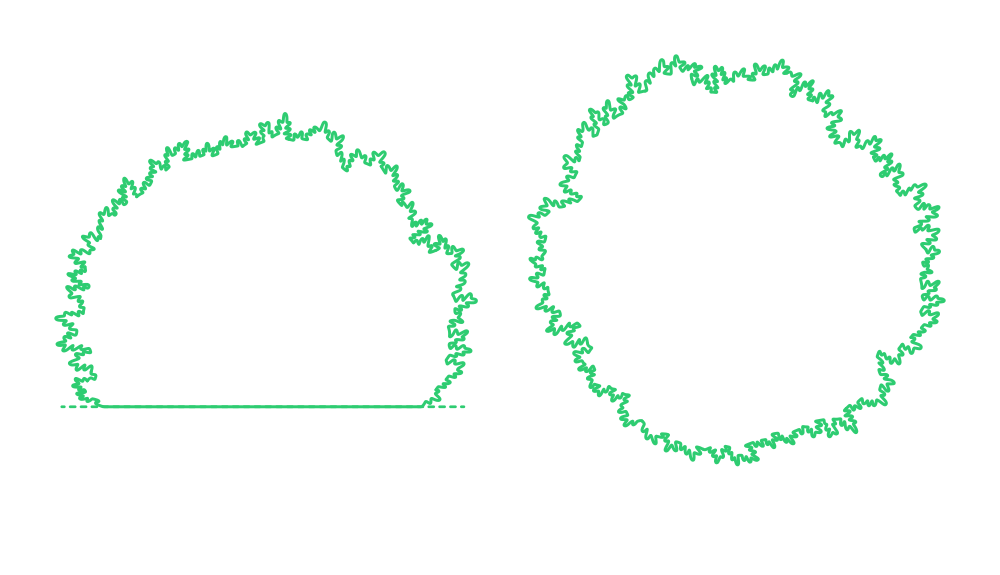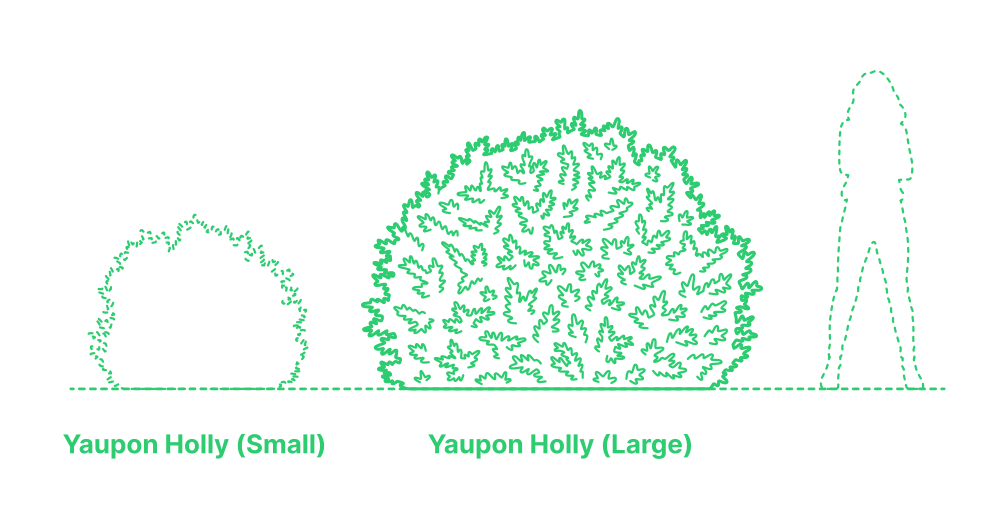
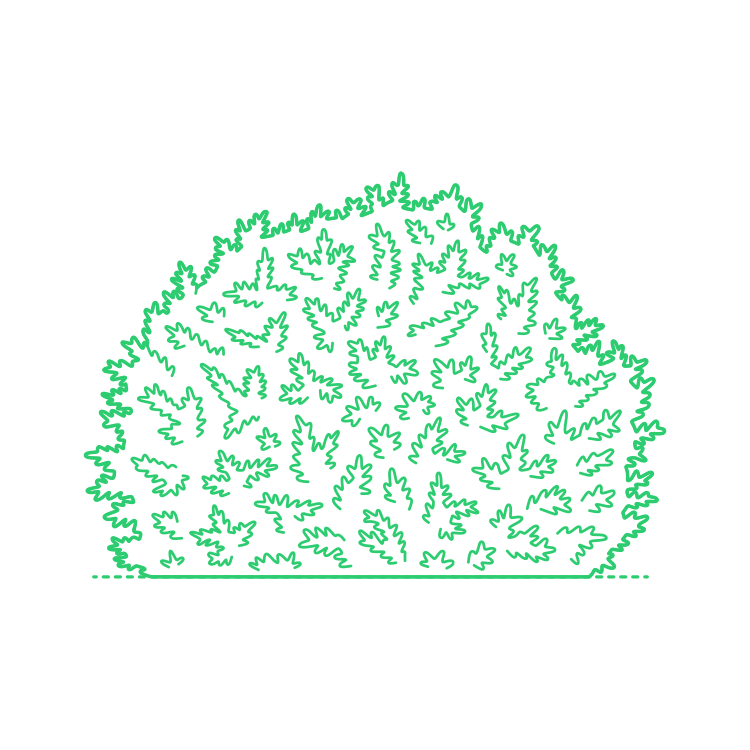
Yaupon holly (Ilex vomitoria) in a large form develops as an evergreen woody shrub with multiple upright stems and a broad canopy of small leaves. The foliage consists of thick, oval leaves with smooth edges arranged alternately along the branches. The leaves are glossy and dark green, remaining present throughout the year and creating a dense canopy.
Native to the southeastern United States, Ilex vomitoria naturally inhabits coastal plains, maritime forests, and sandy woodland environments. The species produces small flowers followed by bright berries on female plants, a characteristic common among hollies. Biologically, yaupon holly is adapted to drought, salt exposure, and poor soils. In its large form, the plant emphasizes dense branching, evergreen foliage, and seasonal fruiting, demonstrating the resilience and ecological adaptability typical of Ilex vomitoria.
Yaupon Holly (Large) has a typical overall height between 4’-6’ (1.22-1.83 m) and spread diameter of 6’-10’ (1.83-3.05 m).
Yaupon holly (Ilex vomitoria) in a large form develops as an evergreen woody shrub with multiple upright stems and a broad canopy of small leaves. The foliage consists of thick, oval leaves with smooth edges arranged alternately along the branches. The leaves are glossy and dark green, remaining present throughout the year and creating a dense canopy.
Native to the southeastern United States, Ilex vomitoria naturally inhabits coastal plains, maritime forests, and sandy woodland environments. The species produces small flowers followed by bright berries on female plants, a characteristic common among hollies. Biologically, yaupon holly is adapted to drought, salt exposure, and poor soils. In its large form, the plant emphasizes dense branching, evergreen foliage, and seasonal fruiting, demonstrating the resilience and ecological adaptability typical of Ilex vomitoria.
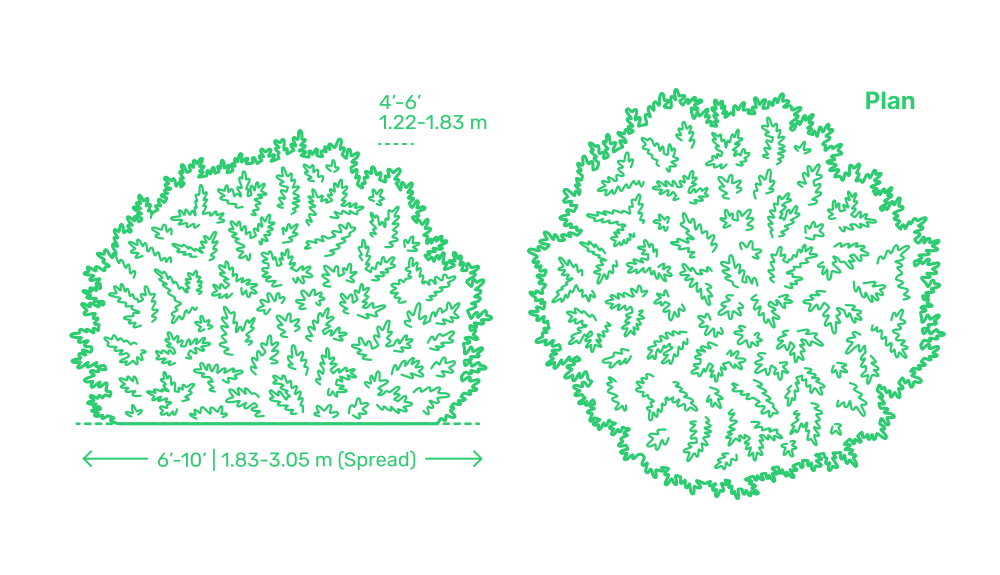
Yaupon Holly (Large) has a typical overall height between 4’-6’ (1.22-1.83 m) and spread diameter of 6’-10’ (1.83-3.05 m).