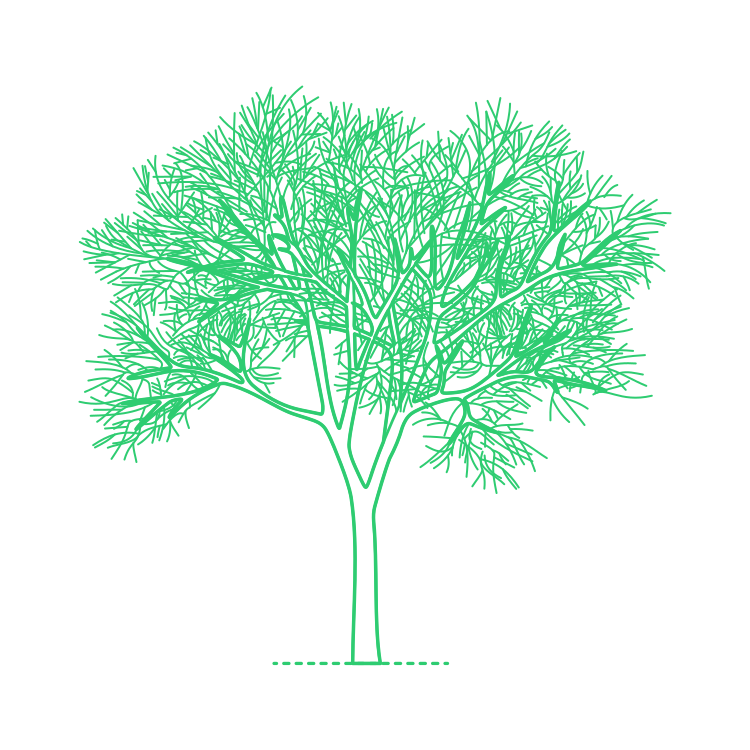
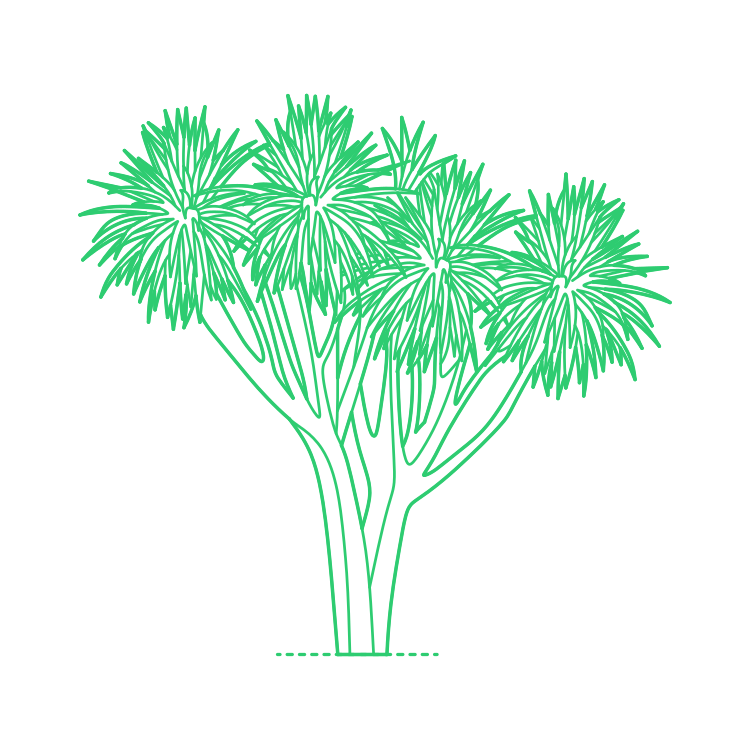
Search Results

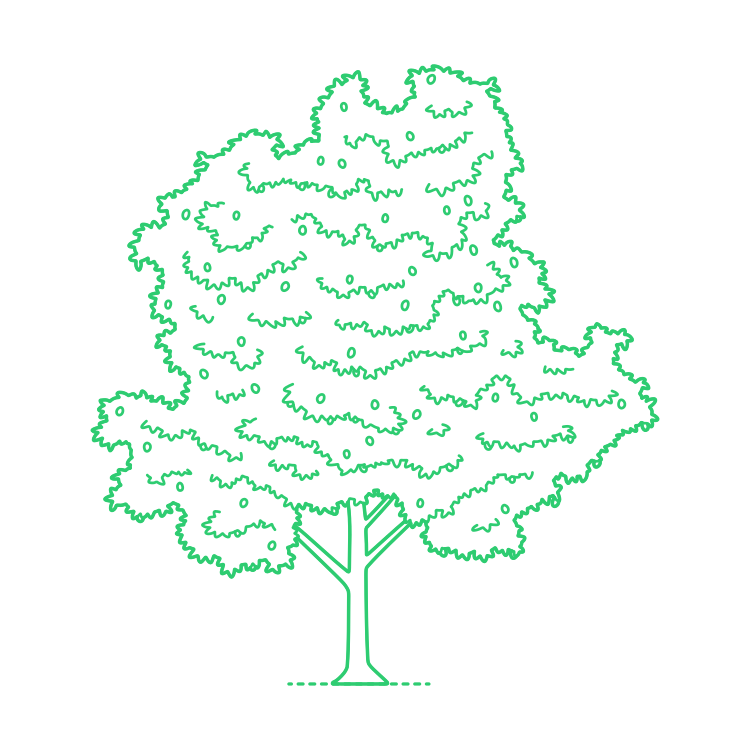
Trees are tall, perennial plants characterized by a single main stem or trunk that supports branches and leaves high above the ground. They grow across a wide range of habitats—from tropical rainforests and temperate woodlands to arid savannas and mountainous regions.
Trees
www.dimensions.com/collection/trees

Trees are tall, perennial plants characterized by a single main stem or trunk that supports branches and leaves high above the ground. They grow across a wide range of habitats—from tropical rainforests and temperate woodlands to arid savannas and mountainous regions.

Deciduous trees are a type of tree that sheds their leaves annually, usually in response to seasonal changes. This adaptation allows them to conserve water and energy during unfavorable conditions, typically in colder or drier climates. Deciduous trees are found in various habitats.
Deciduous Trees
www.dimensions.com/collection/deciduous-trees

Deciduous trees are a type of tree that sheds their leaves annually, usually in response to seasonal changes. This adaptation allows them to conserve water and energy during unfavorable conditions, typically in colder or drier climates. Deciduous trees are found in various habitats.

Evergreen trees are a diverse group of plants that retain their leaves throughout the year, unlike deciduous trees that shed them seasonally. This evergreen characteristic enables them to photosynthesize and grow year-round. Evergreens inhabit various ecosystems including cold boreal forests.
Evergreen Trees
www.dimensions.com/collection/evergreen-trees

Evergreen trees are a diverse group of plants that retain their leaves throughout the year, unlike deciduous trees that shed them seasonally. This evergreen characteristic enables them to photosynthesize and grow year-round. Evergreens inhabit various ecosystems including cold boreal forests.

Hall Trees are multifunctional pieces of entryway furniture designed to organize coats, bags, hats, and shoes in one compact structure. Typically featuring hooks, a mirror, a bench, or drawers, they serve as both a storage solution and a visual anchor near the door.
Hall Trees
www.dimensions.com/collection/hall-tree

Hall Trees are multifunctional pieces of entryway furniture designed to organize coats, bags, hats, and shoes in one compact structure. Typically featuring hooks, a mirror, a bench, or drawers, they serve as both a storage solution and a visual anchor near the door.

Miniature trees are small, container-grown trees cultivated to maintain a scaled-down form while retaining the structure and characteristics of their full-sized counterparts. Typically grown in pots or shallow containers, these trees include naturally dwarf species and trees that are pruned.
Miniature Trees
www.dimensions.com/collection/miniature-trees

Miniature trees are small, container-grown trees cultivated to maintain a scaled-down form while retaining the structure and characteristics of their full-sized counterparts. Typically grown in pots or shallow containers, these trees include naturally dwarf species and trees that are pruned.

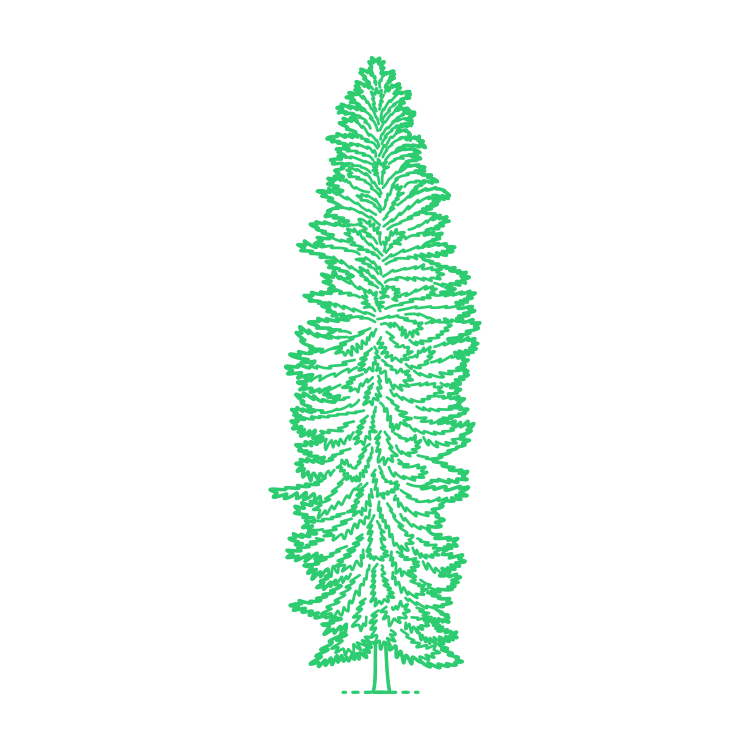
The Pine Tree, Pinus, is an evergreen tree that tall grows tall with branches that have 4 types of leaves. The 4 types of leaves are Seed leaves, Juvenile leaves, Scale leaves, and Needles. The bark of the Pine Tree is thick and scaly, but some species of Pine Trees may have thin or flaky bark.
Pine Trees
www.dimensions.com/element/pine-trees

The Pine Tree, Pinus, is an evergreen tree that tall grows tall with branches that have 4 types of leaves. The 4 types of leaves are Seed leaves, Juvenile leaves, Scale leaves, and Needles. The bark of the Pine Tree is thick and scaly, but some species of Pine Trees may have thin or flaky bark.

Leafless trees are typically deciduous species that shed their leaves during part of the year, most often in response to seasonal changes in temperature, light, or moisture. Found across temperate, subtropical, and some tropical regions, these trees enter a dormant phase to conserve energy.
Leafless Trees
www.dimensions.com/collection/leafless-trees

Leafless trees are typically deciduous species that shed their leaves during part of the year, most often in response to seasonal changes in temperature, light, or moisture. Found across temperate, subtropical, and some tropical regions, these trees enter a dormant phase to conserve energy.

Treeshrews, belonging to the order Scandentia, are small, squirrel-like mammals found primarily in the tropical forests of Southeast Asia. Despite their name and appearance, they are not true shrews and have a closer evolutionary relationship with primates.
Treeshrews | Scandentia
www.dimensions.com/collection/treeshrews-scandentia

Treeshrews, belonging to the order Scandentia, are small, squirrel-like mammals found primarily in the tropical forests of Southeast Asia. Despite their name and appearance, they are not true shrews and have a closer evolutionary relationship with primates.

The Ruddy Treeshrew (Tupaia splendidula) is endemic to Indonesia and is omnivorous. It prefers lower elevations but on trees with foliage. The most recognizable feature is the reddish-brown bushy tail, slender profile, and high alertness. This is because of their good senses. The Ruddy Treeshrew has a body length in the range of 5.9”-7.3” (15-18.5 cm) and total weight of 3.9-5.3 oz (110-150 g). The Ruddy Treeshrew has a standing height of roughly 2.75”-3.5” (7-9 cm), body width of 2”-2.6” (5-6.5 cm), and tail length of 4.7”-5.9” (12-15 cm). The typical lifespan of the Ruddy Treeshrew is between 2-12.5 years.
Ruddy Treeshrew (Tupaia splendidula)
www.dimensions.com/element/ruddy-treeshrew-tupaia-splendidula

The Ruddy Treeshrew (Tupaia splendidula) is endemic to Indonesia and is omnivorous. It prefers lower elevations but on trees with foliage. The most recognizable feature is the reddish-brown bushy tail, slender profile, and high alertness. This is because of their good senses. The Ruddy Treeshrew has a body length in the range of 5.9”-7.3” (15-18.5 cm) and total weight of 3.9-5.3 oz (110-150 g). The Ruddy Treeshrew has a standing height of roughly 2.75”-3.5” (7-9 cm), body width of 2”-2.6” (5-6.5 cm), and tail length of 4.7”-5.9” (12-15 cm). The typical lifespan of the Ruddy Treeshrew is between 2-12.5 years.

The Eucalyptus Tree, Eucalyptus, is an evergreen tree that is multi-stemmed with leather-like leaves that grow obliquely or vertically. The Eucalyptus Tree grows a smooth layer of blue-gray bark every year and sheds the dead layer of bark. There are over 700 species of Eucalyptus Trees.
Eucalyptus Tree
www.dimensions.com/element/eucalyptus-tree

The Eucalyptus Tree, Eucalyptus, is an evergreen tree that is multi-stemmed with leather-like leaves that grow obliquely or vertically. The Eucalyptus Tree grows a smooth layer of blue-gray bark every year and sheds the dead layer of bark. There are over 700 species of Eucalyptus Trees.

The Dogwood Tree, Cornus florida, is a deciduous tree, easily distinguished by its showy white blossoms, berries, and distinguishable bark. The Dogwood Tree has untoothed leaves with veins and grows in a rounded shape. There are between 30 to 60 different species of Dogwood Trees.
Dogwood Tree
www.dimensions.com/element/dogwood-tree

The Dogwood Tree, Cornus florida, is a deciduous tree, easily distinguished by its showy white blossoms, berries, and distinguishable bark. The Dogwood Tree has untoothed leaves with veins and grows in a rounded shape. There are between 30 to 60 different species of Dogwood Trees.

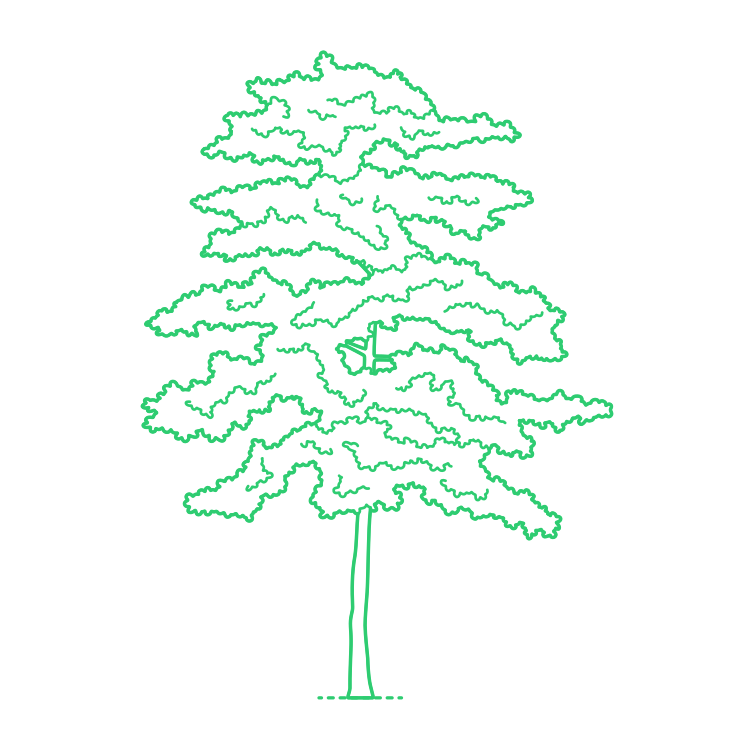
The American Elm Tree, also known as the white elm or water elm, is a large and hardy deciduous tree species native to eastern North America. Scientifically known as Ulmus americana, American Elms are found in rich habitats including floodplains, streams, swamps, hillsides, uplands, and mountains. American Elm Trees are notable for their expansive canopies that reach widths of 60’-100’ (18-30 m) and overall heights between 50’-100’ (15-30 m).
American Elm Tree
www.dimensions.com/element/american-elm-tree

The American Elm Tree, also known as the white elm or water elm, is a large and hardy deciduous tree species native to eastern North America. Scientifically known as Ulmus americana, American Elms are found in rich habitats including floodplains, streams, swamps, hillsides, uplands, and mountains. American Elm Trees are notable for their expansive canopies that reach widths of 60’-100’ (18-30 m) and overall heights between 50’-100’ (15-30 m).

The Tulip Tree, Liriodredon, is a characteristically large deciduous tree with bright green leaves that are similar to tulip flowers after which it was named. The Tulip Tree has an oval shape canopy with yellow-green flowers up high. The aromatic stems make the Tulip Trees easily recognizable.
Tulip Tree
www.dimensions.com/element/tulip-tree

The Tulip Tree, Liriodredon, is a characteristically large deciduous tree with bright green leaves that are similar to tulip flowers after which it was named. The Tulip Tree has an oval shape canopy with yellow-green flowers up high. The aromatic stems make the Tulip Trees easily recognizable.

The Hawthorn Tree, Crataegus monogyna, is a small deciduous tree with a dense canopy. Also known as the Common Hawthorn or Oneseed Hawthorn the tree has dull brown bark with orange-colored cracks. The Hawthorn Tree is native to Europe, Northwest Africa, and West Asia preferring hedgerows and fields.
Hawthorn Tree
www.dimensions.com/element/hawthorn-tree

The Hawthorn Tree, Crataegus monogyna, is a small deciduous tree with a dense canopy. Also known as the Common Hawthorn or Oneseed Hawthorn the tree has dull brown bark with orange-colored cracks. The Hawthorn Tree is native to Europe, Northwest Africa, and West Asia preferring hedgerows and fields.

The Sassafras Tree, Sassafras albidum, is a type of deciduous tree that has become distinguished by its aromatic properties as all parts of the tree are aromatic. The Sassafras Tree can be recognized by its slender branches covered with smooth orange-brown bark. It has 3 distinct leaf patterns.
Sassafras Tree
www.dimensions.com/element/sassafras-tree

The Sassafras Tree, Sassafras albidum, is a type of deciduous tree that has become distinguished by its aromatic properties as all parts of the tree are aromatic. The Sassafras Tree can be recognized by its slender branches covered with smooth orange-brown bark. It has 3 distinct leaf patterns.

Miniature tree forms refer to naturally small or slow-growing plants that develop a tree-like structure with a single main stem and a compact canopy. These forms often arise in alpine, arid, or wind-swept environments where size is limited by harsh conditions.
Miniature Tree Forms
www.dimensions.com/collection/miniature-tree-forms

Miniature tree forms refer to naturally small or slow-growing plants that develop a tree-like structure with a single main stem and a compact canopy. These forms often arise in alpine, arid, or wind-swept environments where size is limited by harsh conditions.

The Sycamore Tree, Acer pseudoplatanus, is a large deciduous tree with serrated leaves and a wide canopy. The Sycamore Tree is recognizable by its bark with irregular patches, green-yellow flowers, and domed crown. The leaves of the tree have 5 lobes with thick veins the protrude on the underside.
Sycamore Tree
www.dimensions.com/element/sycamore-tree

The Sycamore Tree, Acer pseudoplatanus, is a large deciduous tree with serrated leaves and a wide canopy. The Sycamore Tree is recognizable by its bark with irregular patches, green-yellow flowers, and domed crown. The leaves of the tree have 5 lobes with thick veins the protrude on the underside.

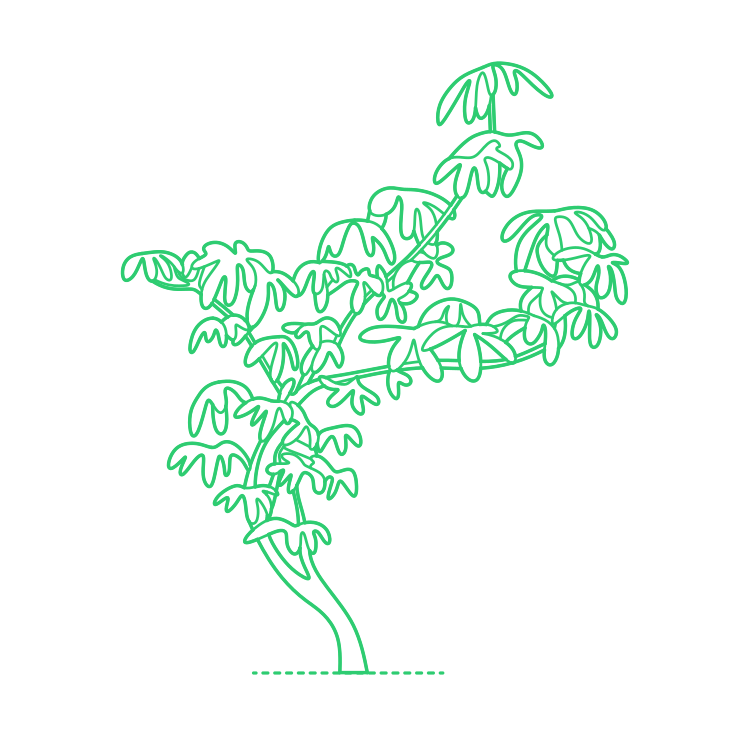
Succulent tree forms represent a unique category of plants that combine the structural appearance of trees with the water-retaining qualities of succulents. Typically found in arid and semi-arid regions, these plants have evolved to store moisture in thickened trunks or branches.
Succulent Tree Forms
www.dimensions.com/collection/succulent-tree-forms

Succulent tree forms represent a unique category of plants that combine the structural appearance of trees with the water-retaining qualities of succulents. Typically found in arid and semi-arid regions, these plants have evolved to store moisture in thickened trunks or branches.

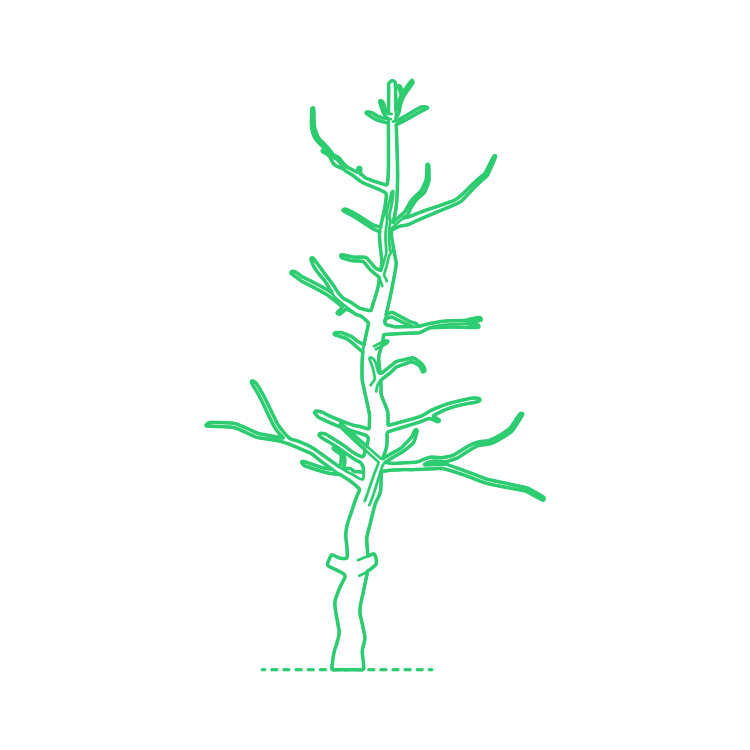
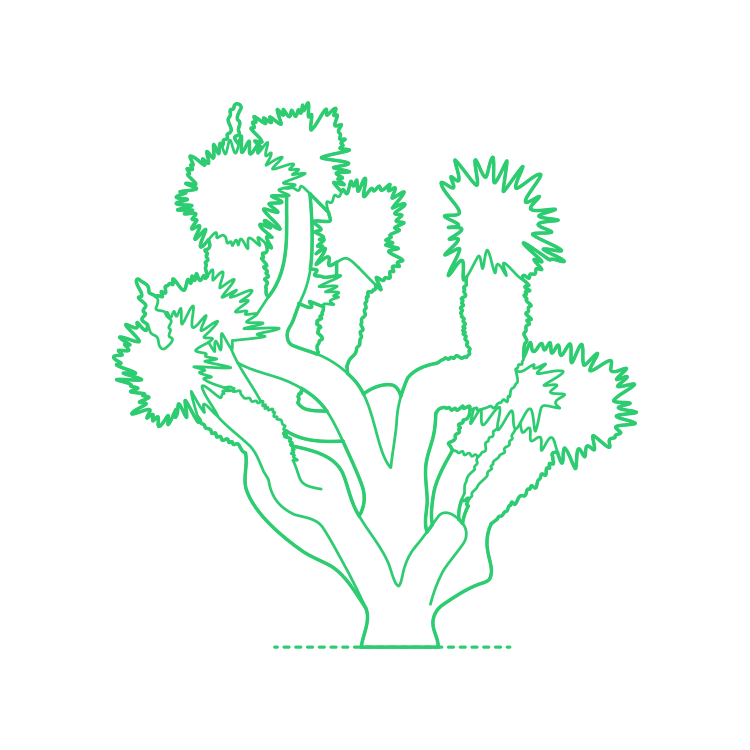
Spruce Tree (Dead) stands as the weathered remnant of a once-living conifer, its skeletal frame stripped of needles and vitality. The tall, tapering trunk often remains upright, though bark may peel away in patches, exposing pale wood beneath. Branches extend in brittle tiers. Spruce Trees (Dead) have a typical overall height between 20’-30’ (6.1-9.14 m) and spread diameter of 8’-16’ (2.44-4.88 m).
Spruce (Dead)
www.dimensions.com/element/spruce-dead

Spruce Tree (Dead) stands as the weathered remnant of a once-living conifer, its skeletal frame stripped of needles and vitality. The tall, tapering trunk often remains upright, though bark may peel away in patches, exposing pale wood beneath. Branches extend in brittle tiers. Spruce Trees (Dead) have a typical overall height between 20’-30’ (6.1-9.14 m) and spread diameter of 8’-16’ (2.44-4.88 m).

The Ginkgo (Maidenhair) Tree, Ginkgo bilboa, is a deciduous tree with a large angular canopy and long erratic branches as it grows with a pyramidal silhouette. The Ginkgo (Maidenhair) Tree also grows deep roots and has fan-shaped leaves with veins that radiate out.
Ginkgo | Maidenhair Tree
www.dimensions.com/element/ginkgo-maidenhair-tree

The Ginkgo (Maidenhair) Tree, Ginkgo bilboa, is a deciduous tree with a large angular canopy and long erratic branches as it grows with a pyramidal silhouette. The Ginkgo (Maidenhair) Tree also grows deep roots and has fan-shaped leaves with veins that radiate out.

Leafless weeping willows, classified within the genus Salix, are deciduous trees defined by long, slender branches that descend in cascading arcs from elevated limbs. In the absence of leaves, the tree’s distinctive drooping architecture becomes fully exposed. Weeping Willow (Leafless) has a typical overall height between 30’-50’ (9.14-15.24 m) and spread diameter of 30’-50’ (9.14-15.24 m).
Weeping Willow (Leafless) (Salix babylonica)
www.dimensions.com/element/weeping-willow-leafless-salix-babylonica

Leafless weeping willows, classified within the genus Salix, are deciduous trees defined by long, slender branches that descend in cascading arcs from elevated limbs. In the absence of leaves, the tree’s distinctive drooping architecture becomes fully exposed. Weeping Willow (Leafless) has a typical overall height between 30’-50’ (9.14-15.24 m) and spread diameter of 30’-50’ (9.14-15.24 m).

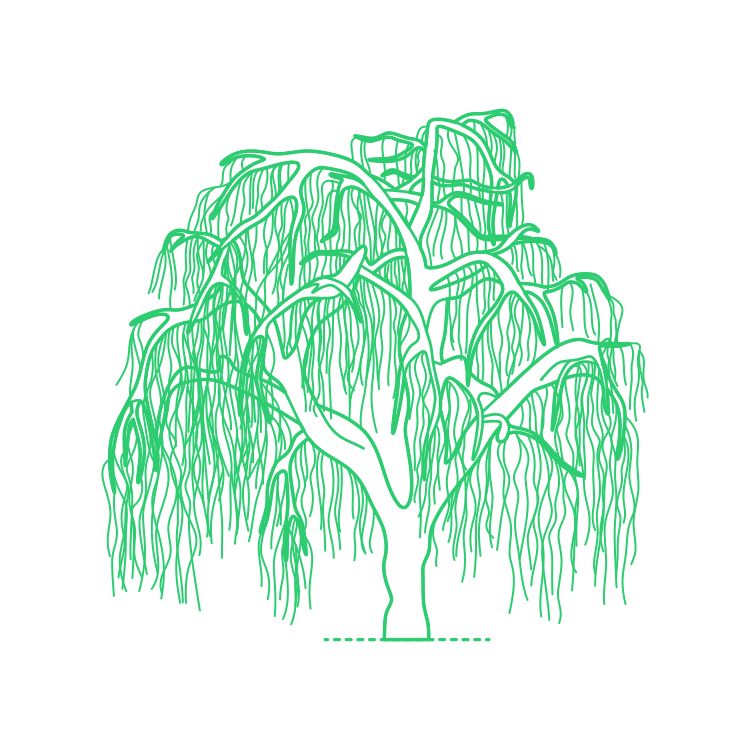
Small leafless maples represent compact expressions of the genus Acer, with slender trunks and a restrained branching framework. In dormancy, the tree’s structure reveals a simple hierarchy of short primary branches that divide into fine, closely spaced twigs, forming a tight, orderly crown. Maple (Leafless, Small) has a typical overall height between 15’-25’ (4.57-7.62 m) and spread diameter of 20’-30’ (6.1-9.14 m).
Maple (Leafless, Small) (Acer)
www.dimensions.com/element/maple-leafless-small-acer

Small leafless maples represent compact expressions of the genus Acer, with slender trunks and a restrained branching framework. In dormancy, the tree’s structure reveals a simple hierarchy of short primary branches that divide into fine, closely spaced twigs, forming a tight, orderly crown. Maple (Leafless, Small) has a typical overall height between 15’-25’ (4.57-7.62 m) and spread diameter of 20’-30’ (6.1-9.14 m).

The Weeping Willow Tree, Salix babylonica, is a medium to large deciduous tree that is characterized by its open crown of branches that sweep down towards the ground. It is easily recognized by its long finely serrated leaves that also grown in a downwards form.
Weeping Willow Tree
www.dimensions.com/element/weeping-willow-tree

The Weeping Willow Tree, Salix babylonica, is a medium to large deciduous tree that is characterized by its open crown of branches that sweep down towards the ground. It is easily recognized by its long finely serrated leaves that also grown in a downwards form.

Leafless hornbeams, classified under the genus Carpinus, are deciduous trees distinguished by dense branching patterns and a compact, structurally coherent crown. In dormancy, Carpinus reveals thick primary limbs that divide frequently, creating a tightly knit internal framework. Hornbeam (Leafless) has a typical overall height between 20’-40’ (6.1-12.19 m) and spread diameter of 20’-40’ (6.1-12.19 m).
Hornbeam (Leafless) (Carpinus)
www.dimensions.com/element/hornbeam-leafless-carpinus

Leafless hornbeams, classified under the genus Carpinus, are deciduous trees distinguished by dense branching patterns and a compact, structurally coherent crown. In dormancy, Carpinus reveals thick primary limbs that divide frequently, creating a tightly knit internal framework. Hornbeam (Leafless) has a typical overall height between 20’-40’ (6.1-12.19 m) and spread diameter of 20’-40’ (6.1-12.19 m).

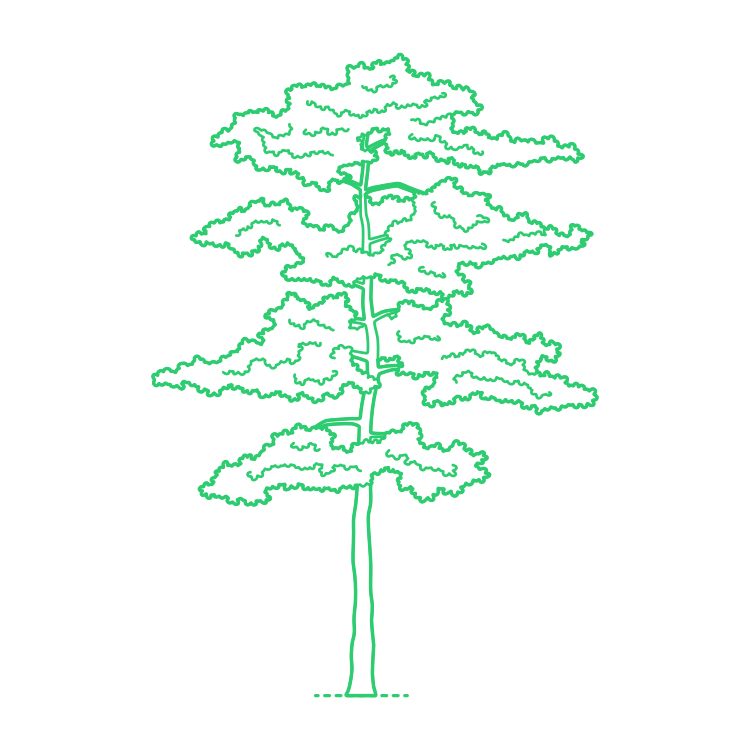
Tree-like plants are species that resemble true trees in shape and function but do not meet strict botanical definitions of a tree. These include tall, woody or semi-woody plants such as large shrubs, palms, cycads, and certain ferns that grow with a single or clustered trunk and an elevated canopy.
Tree-Like Plants
www.dimensions.com/collection/tree-like-plants

Tree-like plants are species that resemble true trees in shape and function but do not meet strict botanical definitions of a tree. These include tall, woody or semi-woody plants such as large shrubs, palms, cycads, and certain ferns that grow with a single or clustered trunk and an elevated canopy.

A modern staple for the fashionista, the Teddy Hall Tree is two separate pieces; a mountable board and shelf unit with five hooks and a lower cabinet piece. The Teddy Hall Tree is made out of manufactured wood and is sold in white to match the clean, sharp aesthetic of a modern home. The Teddy Hall Tree has an overall height of 67.5” (171 cm), width of 31” (79 cm), and depth of 31.125” (79 cm).
Teddy Hall Tree
www.dimensions.com/element/teddy-hall-tree

A modern staple for the fashionista, the Teddy Hall Tree is two separate pieces; a mountable board and shelf unit with five hooks and a lower cabinet piece. The Teddy Hall Tree is made out of manufactured wood and is sold in white to match the clean, sharp aesthetic of a modern home. The Teddy Hall Tree has an overall height of 67.5” (171 cm), width of 31” (79 cm), and depth of 31.125” (79 cm).

The Collier Hall Tree resembles a hutch, but instead of collecting knick-knacks, its three hooks, drawers, and six cubbies provide a useful storage solution to any mudroom or entryway. Built from reclaimed pinewood with brass hooks, the Collier Hall Tree brings an earthy feature to any home. The Collier Hall Tree has an overall height of 74” (188 cm), width of 58” (147 cm), and depth of 20” (51 cm).
Collier Hall Tree
www.dimensions.com/element/collier-hall-tree

The Collier Hall Tree resembles a hutch, but instead of collecting knick-knacks, its three hooks, drawers, and six cubbies provide a useful storage solution to any mudroom or entryway. Built from reclaimed pinewood with brass hooks, the Collier Hall Tree brings an earthy feature to any home. The Collier Hall Tree has an overall height of 74” (188 cm), width of 58” (147 cm), and depth of 20” (51 cm).

The Elkland Hall Tree, made from solid rubberwood, is a large, organization piece to place in a mudroom. Equipped with a bench, hooks, shelves, and rustic charm, the Elkland Hall Tree offers a perfect place to put on last minute items before heading out the door. The Elkland Hall Tree has an overall height of 73.25” (186 cm), width of 37.25” (95 cm), and depth of 17.75” (45 cm).
Elkland Hall Tree
www.dimensions.com/element/elkland-hall-tree

The Elkland Hall Tree, made from solid rubberwood, is a large, organization piece to place in a mudroom. Equipped with a bench, hooks, shelves, and rustic charm, the Elkland Hall Tree offers a perfect place to put on last minute items before heading out the door. The Elkland Hall Tree has an overall height of 73.25” (186 cm), width of 37.25” (95 cm), and depth of 17.75” (45 cm).

Light and airy, but not skimpy on organization features, the Lieberman Hall Tree proves that entryway storage does not need to heavy and space consuming. Framed with powder coated metal, with chestnut-finished wood panels, the Lieberman Hall Tree brings functional storage with a touch of rustic. The Lieberman Hall Tree has an overall height of 71” (180 cm), width of 40” (102 cm), and depth of 16” (41 cm).
Lieberman Hall Tree
www.dimensions.com/element/lieberman-hall-tree

Light and airy, but not skimpy on organization features, the Lieberman Hall Tree proves that entryway storage does not need to heavy and space consuming. Framed with powder coated metal, with chestnut-finished wood panels, the Lieberman Hall Tree brings functional storage with a touch of rustic. The Lieberman Hall Tree has an overall height of 71” (180 cm), width of 40” (102 cm), and depth of 16” (41 cm).

The Thetford Hall Tree is made from metal and is freestanding coat rack perfect for areas where closet storage is lacking. The Thetford Hall Tree has six double ended hooks; perfect for hanging a coat and a hat, a jacket and purse, or a scarf and a dog leash. The Thetford Hall Tree has an overall height of 71.5” (182 cm), width of 26” (66 cm), and depth of 13.25” (34 cm).
Thetford Hall Tree
www.dimensions.com/element/thetford-hall-tree

The Thetford Hall Tree is made from metal and is freestanding coat rack perfect for areas where closet storage is lacking. The Thetford Hall Tree has six double ended hooks; perfect for hanging a coat and a hat, a jacket and purse, or a scarf and a dog leash. The Thetford Hall Tree has an overall height of 71.5” (182 cm), width of 26” (66 cm), and depth of 13.25” (34 cm).