
Scientifically known as Pteromys momonga, the Japanese Dwarf Flying Squirrel is a medium-sized rodent that is active at night unlike the common squirrel. In actuality, flying squirrels glide rather than flies (like bats or birds) through membranes of fur connected from its front to its back legs.
The apanese Dwarf Flying Squirrel can maintain stability and maneuver itself through the air with both its limbs and tail. When landing, the flying squirrel comes down on its padded hind feet. Its gliding abilities in combination with its sole activity at night allow the flying squirrel to evade potential predators, utilizing its large eyes to see in the dark.
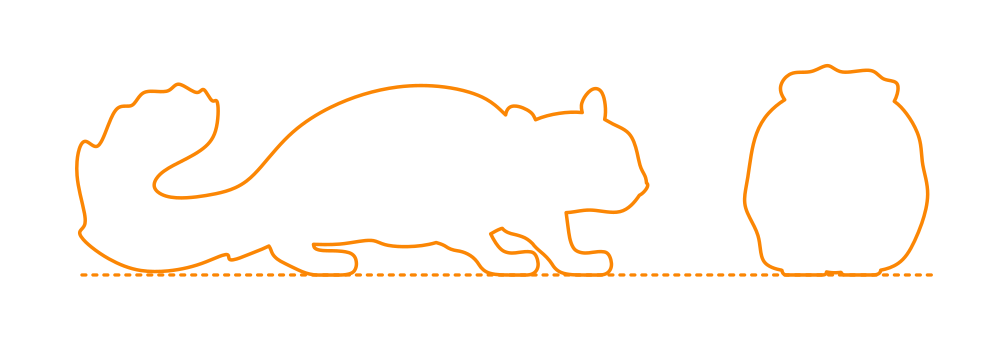
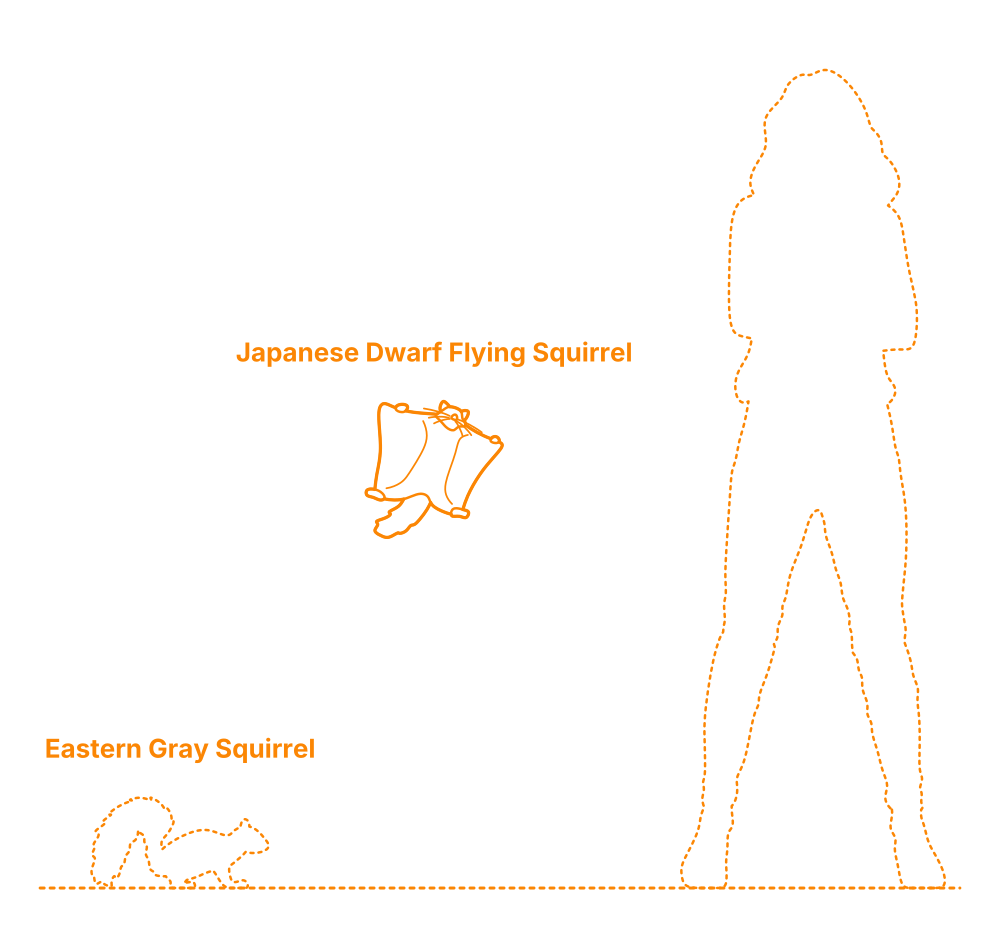
Japanese Dwarf Flying Squirrels have a height of 2.6”-4.3” (6.5-11 cm), body length between 5.5”-9” (14-23 cm), and an overall weight in the range of .3-.5 lb (150-220 g). The tail length of a Japanese Dwarf Flying Squirrel is 3.9”-5.5” (10-14 cm). Japanese Dwarf Flying Squirrels have a typical lifespan of 5-7 years in the wild and up to 10-19 years in captivity.

Scientifically known as Pteromys momonga, the Japanese Dwarf Flying Squirrel is a medium-sized rodent that is active at night unlike the common squirrel. In actuality, flying squirrels glide rather than flies (like bats or birds) through membranes of fur connected from its front to its back legs.
The apanese Dwarf Flying Squirrel can maintain stability and maneuver itself through the air with both its limbs and tail. When landing, the flying squirrel comes down on its padded hind feet. Its gliding abilities in combination with its sole activity at night allow the flying squirrel to evade potential predators, utilizing its large eyes to see in the dark.
Japanese Dwarf Flying Squirrels have a height of 2.6”-4.3” (6.5-11 cm), body length between 5.5”-9” (14-23 cm), and an overall weight in the range of .3-.5 lb (150-220 g). The tail length of a Japanese Dwarf Flying Squirrel is 3.9”-5.5” (10-14 cm). Japanese Dwarf Flying Squirrels have a typical lifespan of 5-7 years in the wild and up to 10-19 years in captivity.