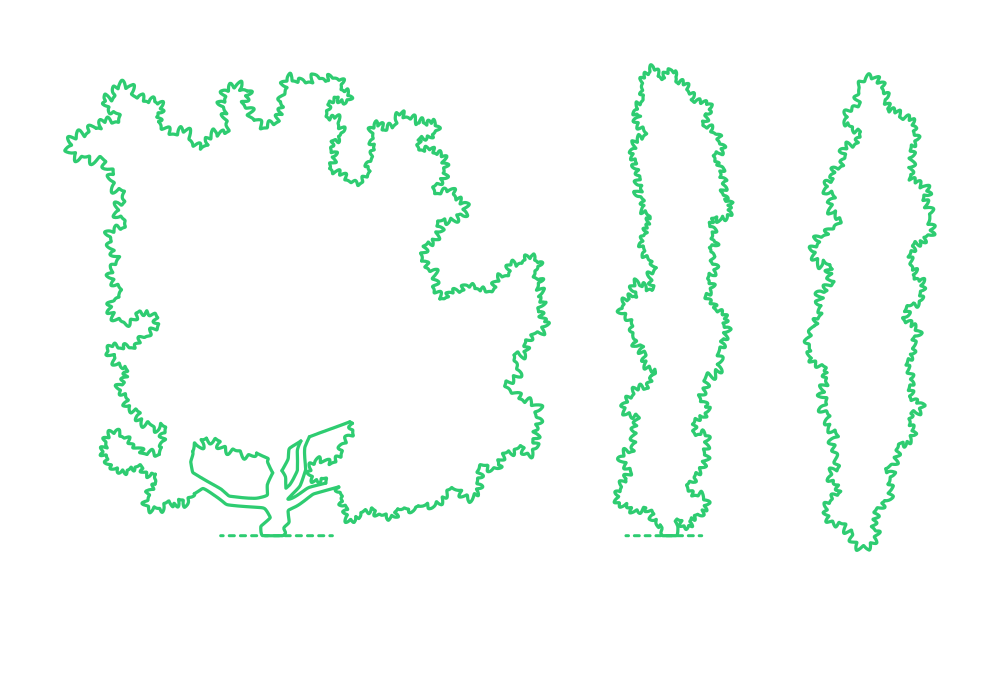
Common Ivy (Climbing, Bottom, Wild) (Hedera helix)
Common Ivy (Climbing, Bottom, Wild) (Hedera helix)
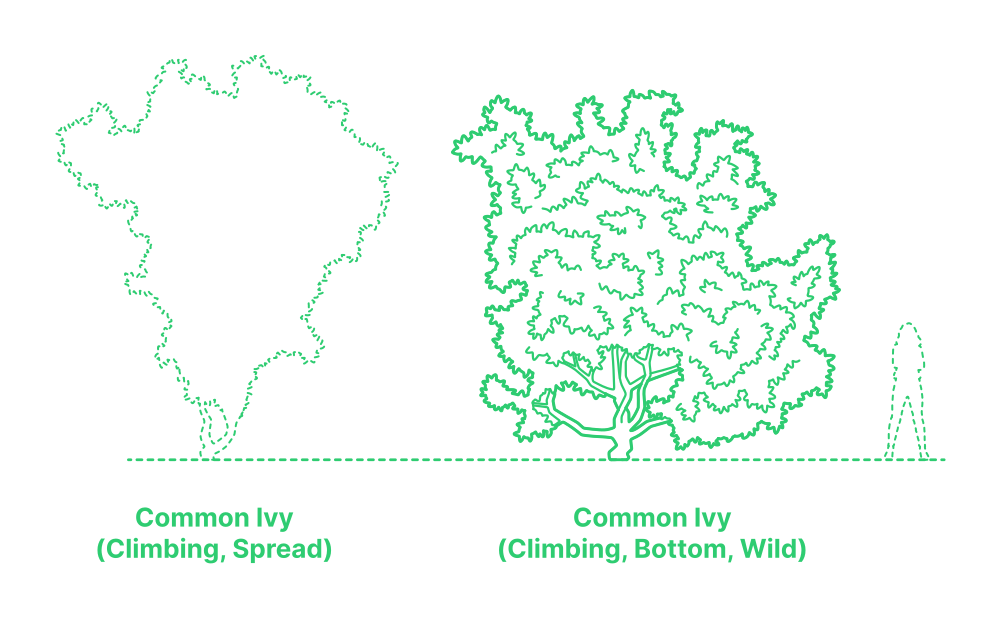
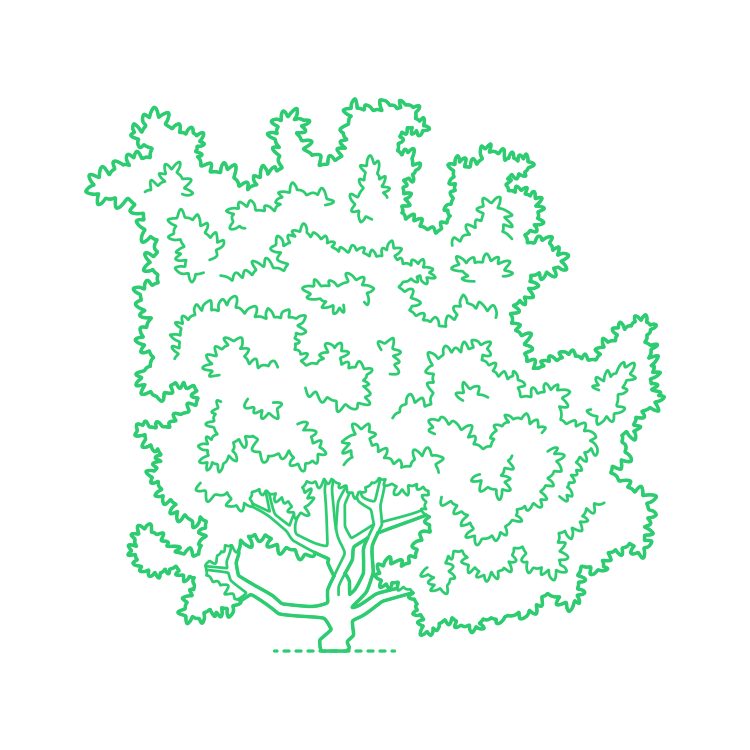
Common ivy (Hedera helix) in a climbing bottom wild form develops as a woody evergreen vine originating at ground level and expanding upward in a highly irregular pattern. The stems branch unpredictably, attaching to surfaces through aerial rootlets while also extending outward and overlapping in multiple directions. Leaves are lobed and arranged alternately, but their distribution varies, producing areas of dense coverage alongside more open sections.
Native to Europe and western Asia, Hedera helix commonly grows in forests, ruins, and rocky landscapes where it climbs freely without constraint. The species is biologically notable for its adaptability and ability to shift between groundcover, climbing, and hanging forms. In this wild bottom form, the plant emphasizes organic expansion and uneven growth, reflecting its natural tendency to colonize surfaces opportunistically rather than forming a controlled or uniform structure.
Common Ivy (Climbing, Bottom, Wild) has a typical cultivated height between 10’-16’ (3.05-4.88 m) and spread of 10’-16’ (3.05-4.88 m). The leaf length is between 2”-4” (5-10 cm).
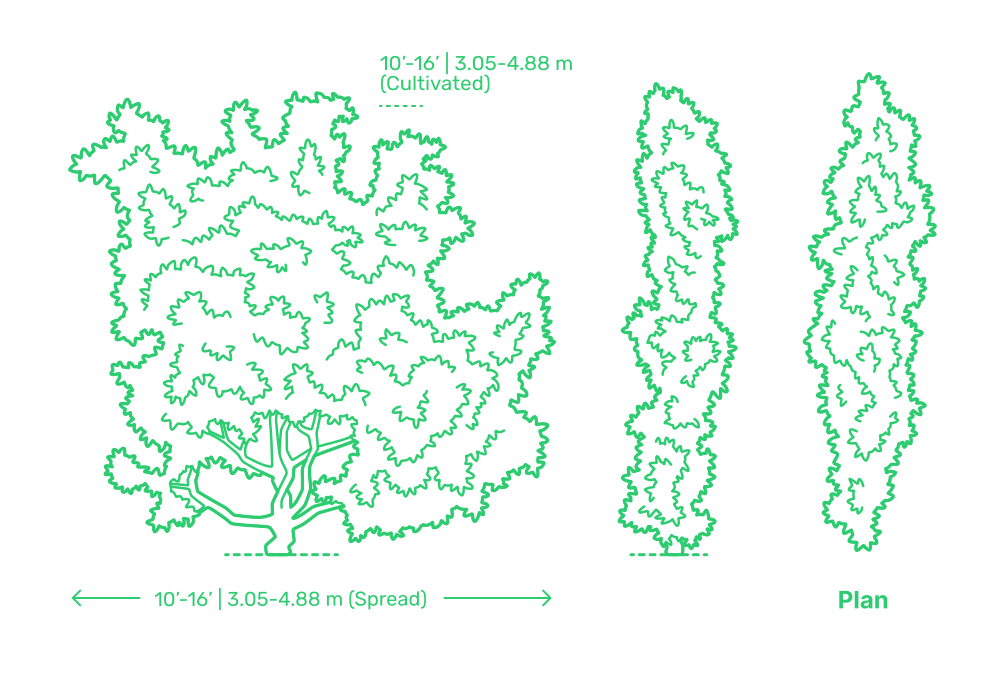
Common ivy (Hedera helix) in a climbing bottom wild form develops as a woody evergreen vine originating at ground level and expanding upward in a highly irregular pattern. The stems branch unpredictably, attaching to surfaces through aerial rootlets while also extending outward and overlapping in multiple directions. Leaves are lobed and arranged alternately, but their distribution varies, producing areas of dense coverage alongside more open sections.
Native to Europe and western Asia, Hedera helix commonly grows in forests, ruins, and rocky landscapes where it climbs freely without constraint. The species is biologically notable for its adaptability and ability to shift between groundcover, climbing, and hanging forms. In this wild bottom form, the plant emphasizes organic expansion and uneven growth, reflecting its natural tendency to colonize surfaces opportunistically rather than forming a controlled or uniform structure.
Common Ivy (Climbing, Bottom, Wild) has a typical cultivated height between 10’-16’ (3.05-4.88 m) and spread of 10’-16’ (3.05-4.88 m). The leaf length is between 2”-4” (5-10 cm).