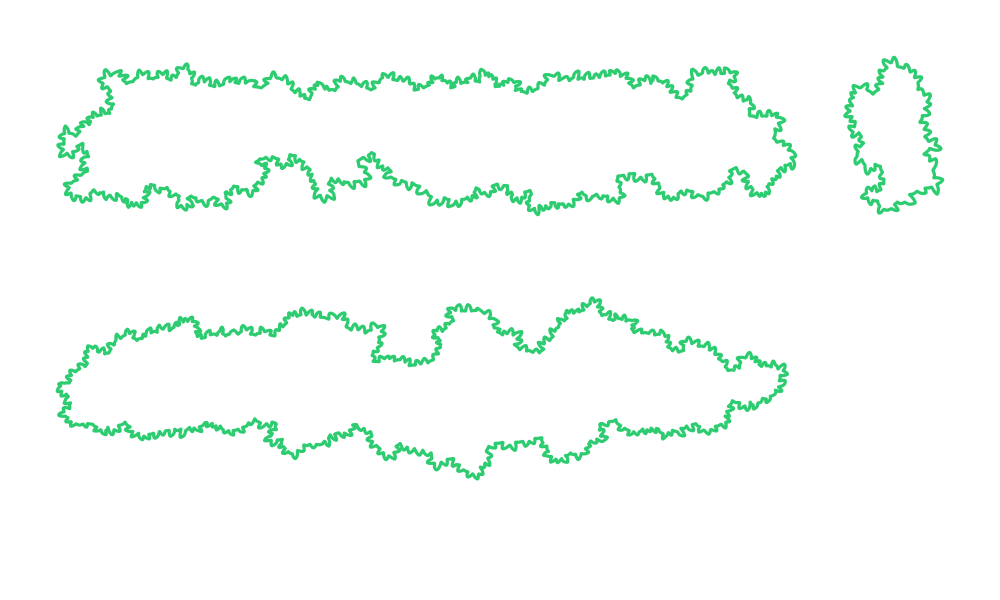
Common Ivy (Hanging, Row) (Hedera helix)
Common Ivy (Hanging, Row) (Hedera helix)
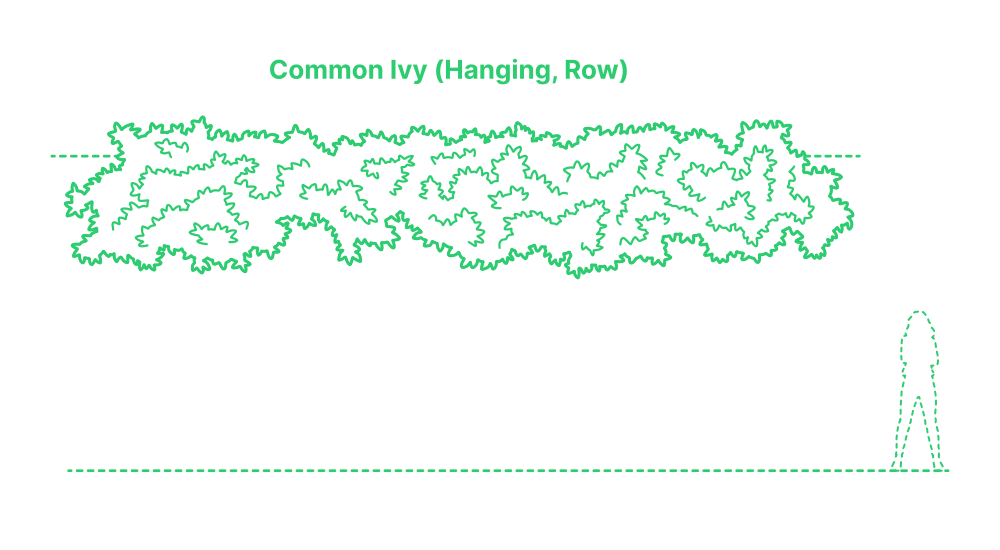
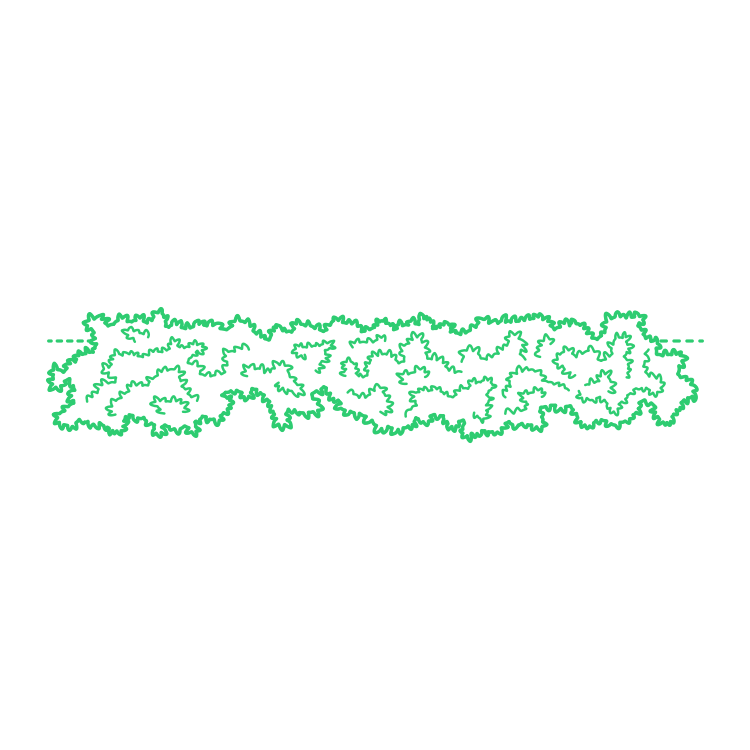
Common ivy (Hedera helix) in a hanging row form develops as a series of trailing stems descending from a linear origin. The vines extend downward in parallel strands, forming a curtain-like arrangement of foliage. Leaves are lobed and arranged along flexible stems, creating a layered yet organized appearance.
Native to Europe and western Asia, Hedera helix naturally occupies cliffs and elevated surfaces where trailing growth occurs. The species is biologically notable for its ability to transition between climbing and hanging depending on support availability. In this row-based hanging form, the plant emphasizes uniform downward growth and repeated vertical strands, maintaining its evergreen foliage while adapting to gravity-driven expansion.
Common Ivy (Hanging, Row) has a typical cultivated height between 3’-5’ (.91-1.52 m) and row length of 10’-25’ (3.05-7.62 m). The leaf length is between 2”-4” (5-10 cm).
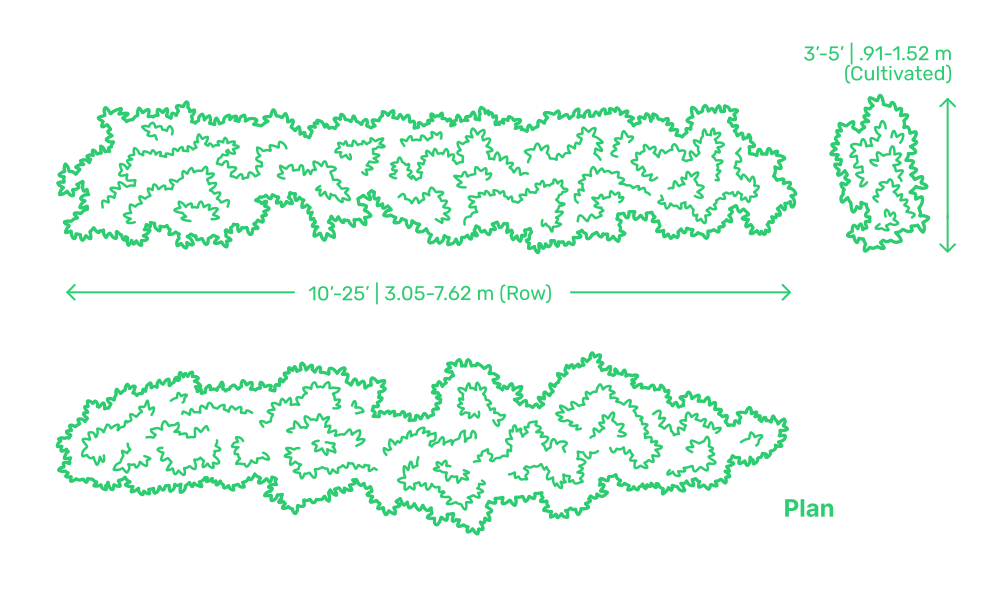
Common ivy (Hedera helix) in a hanging row form develops as a series of trailing stems descending from a linear origin. The vines extend downward in parallel strands, forming a curtain-like arrangement of foliage. Leaves are lobed and arranged along flexible stems, creating a layered yet organized appearance.
Native to Europe and western Asia, Hedera helix naturally occupies cliffs and elevated surfaces where trailing growth occurs. The species is biologically notable for its ability to transition between climbing and hanging depending on support availability. In this row-based hanging form, the plant emphasizes uniform downward growth and repeated vertical strands, maintaining its evergreen foliage while adapting to gravity-driven expansion.
Common Ivy (Hanging, Row) has a typical cultivated height between 3’-5’ (.91-1.52 m) and row length of 10’-25’ (3.05-7.62 m). The leaf length is between 2”-4” (5-10 cm).