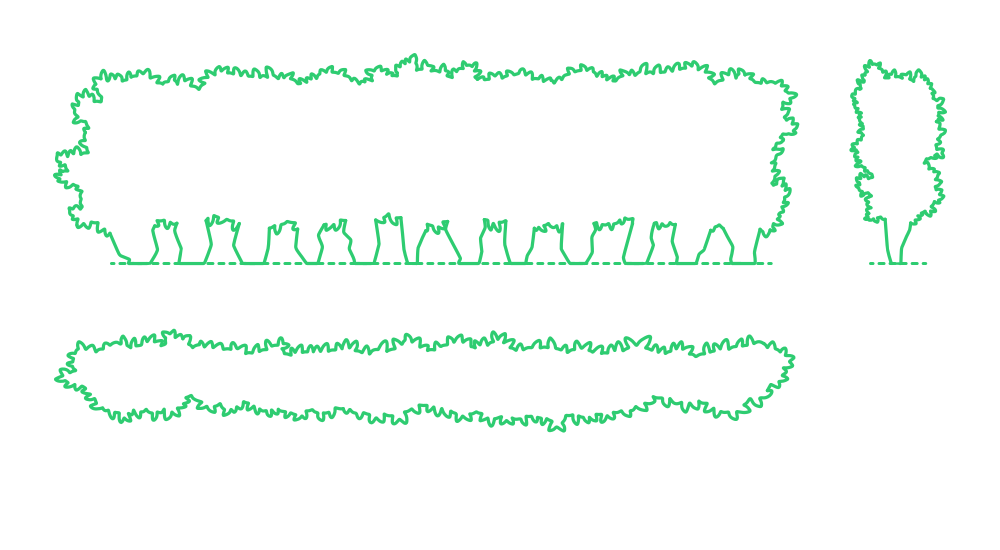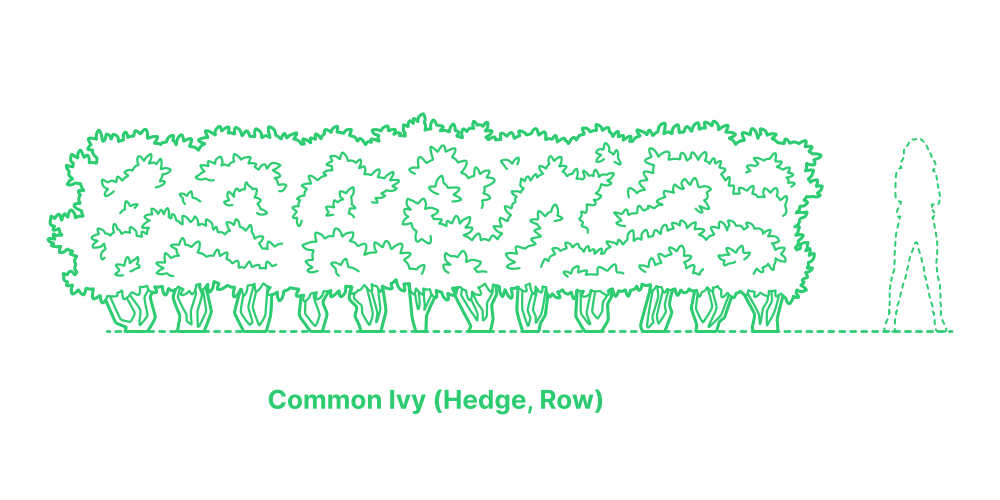
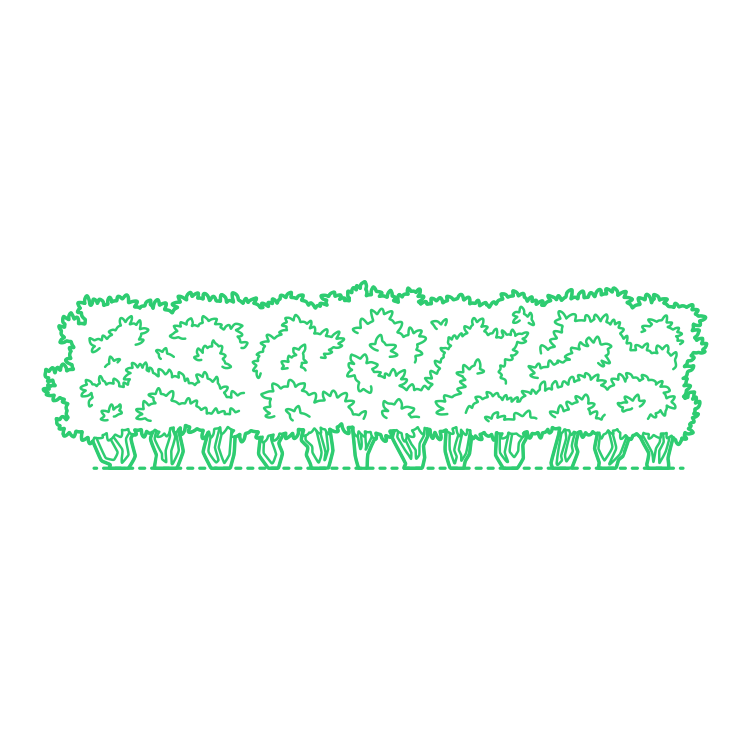
Common ivy (Hedera helix) in a hedge row form develops as a continuous band of dense foliage formed by multiple plants growing in alignment. The stems interweave and attach to one another and nearby surfaces, creating a cohesive structure. Leaves are evergreen, lobed, and arranged alternately, forming a thick canopy.
Native to Europe and western Asia, Hedera helix often grows in hedgerows and woodland boundaries. The species is biologically notable for its ability to maintain dense coverage and resist environmental stress. In this row hedge form, the plant emphasizes linear continuity and structural density, functioning as a unified vegetative barrier with persistent foliage.
Common Ivy (Hedge, Row) has a typical cultivated height between 3’-6’ (.91-1.83 m) and row length of 10’-25’ (3.05-7.62 m). The leaf length is between 2”-4” (5-10 cm).
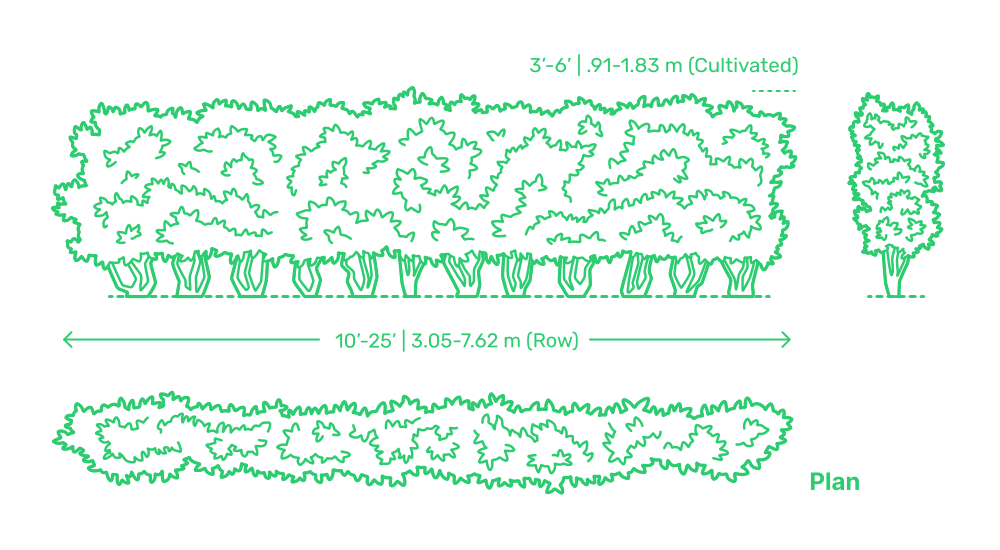
Common ivy (Hedera helix) in a hedge row form develops as a continuous band of dense foliage formed by multiple plants growing in alignment. The stems interweave and attach to one another and nearby surfaces, creating a cohesive structure. Leaves are evergreen, lobed, and arranged alternately, forming a thick canopy.
Native to Europe and western Asia, Hedera helix often grows in hedgerows and woodland boundaries. The species is biologically notable for its ability to maintain dense coverage and resist environmental stress. In this row hedge form, the plant emphasizes linear continuity and structural density, functioning as a unified vegetative barrier with persistent foliage.
Common Ivy (Hedge, Row) has a typical cultivated height between 3’-6’ (.91-1.83 m) and row length of 10’-25’ (3.05-7.62 m). The leaf length is between 2”-4” (5-10 cm).