Japanese Cheesewood (Tree, Large) (Pittosporum tobira)
Japanese Cheesewood (Tree, Large) (Pittosporum tobira)
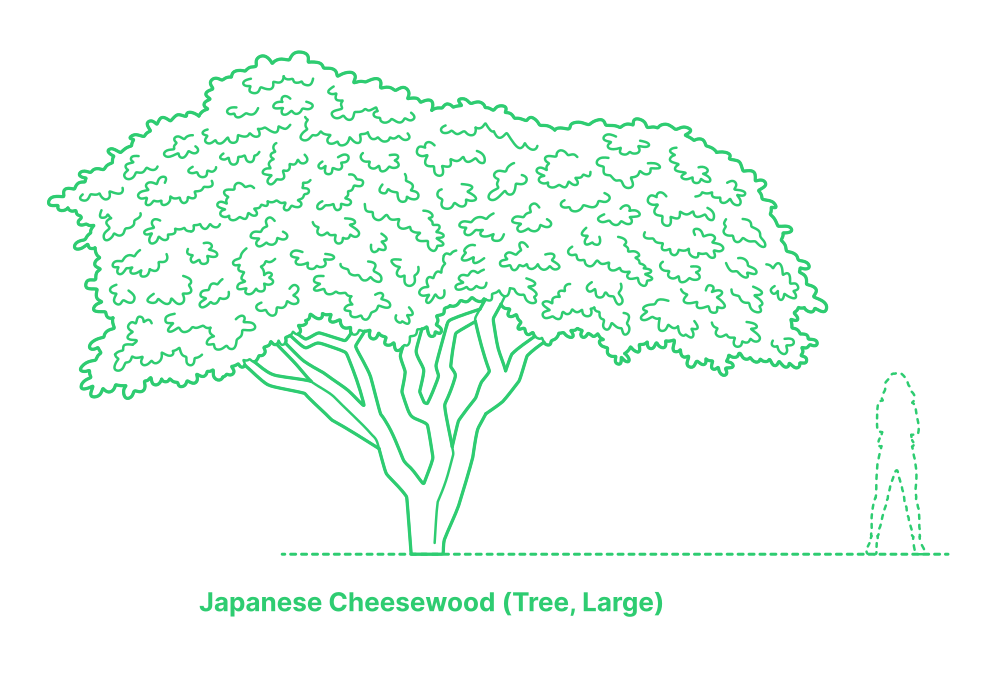
Japanese cheesewood (Pittosporum tobira) in a large form develops as a dense, rounded tree-like evergreen with a broad branching structure and thick clusters of leathery foliage concentrated near the ends of its stems. The leaves are glossy, oval, and dark green, often arranged in whorled formations that create layered masses of foliage across the canopy. The branching habit is compact yet architectural, with sturdy woody limbs supporting a sculptural crown.
Also known as Japanese mock orange, Pittosporum tobira is native to East Asia, particularly Japan, China, and Korea, where it commonly grows along coastal forests and rocky slopes. A notable biological trait is its tolerance for wind, salt, and environmental exposure, reflecting its native shoreline habitats. The species produces small clusters of fragrant flowers followed by seed capsules that split open when mature. In larger form, Pittosporum tobira emphasizes mass, evergreen density, and sculptural foliage arrangement, making it visually distinct among compact architectural tree-like plants.
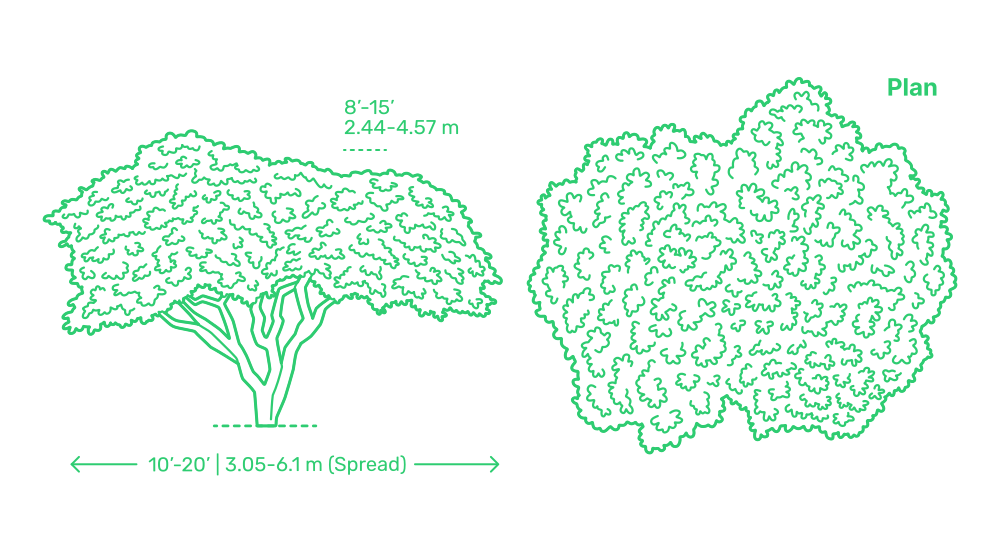
Japanese Cheesewood (Tree, Large) has a typical overall height between 8’-15’ (2.44-4.57 m) and spread diameter of 10’-20’ (3.05-6.1 m). The leaves have a typical length between 2”-5” (5-13 cm).
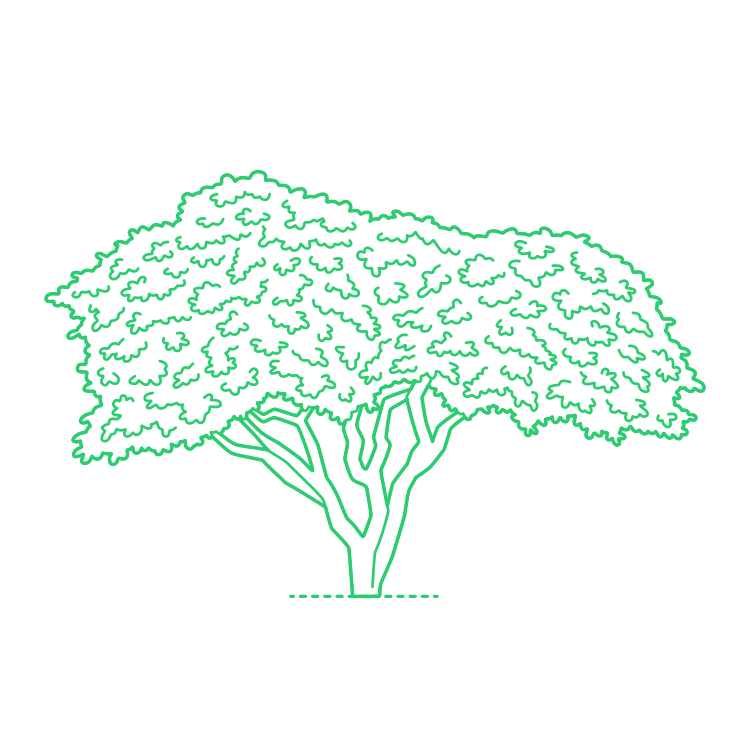
Japanese cheesewood (Pittosporum tobira) in a large form develops as a dense, rounded tree-like evergreen with a broad branching structure and thick clusters of leathery foliage concentrated near the ends of its stems. The leaves are glossy, oval, and dark green, often arranged in whorled formations that create layered masses of foliage across the canopy. The branching habit is compact yet architectural, with sturdy woody limbs supporting a sculptural crown.
Also known as Japanese mock orange, Pittosporum tobira is native to East Asia, particularly Japan, China, and Korea, where it commonly grows along coastal forests and rocky slopes. A notable biological trait is its tolerance for wind, salt, and environmental exposure, reflecting its native shoreline habitats. The species produces small clusters of fragrant flowers followed by seed capsules that split open when mature. In larger form, Pittosporum tobira emphasizes mass, evergreen density, and sculptural foliage arrangement, making it visually distinct among compact architectural tree-like plants.
Japanese Cheesewood (Tree, Large) has a typical overall height between 8’-15’ (2.44-4.57 m) and spread diameter of 10’-20’ (3.05-6.1 m). The leaves have a typical length between 2”-5” (5-13 cm).