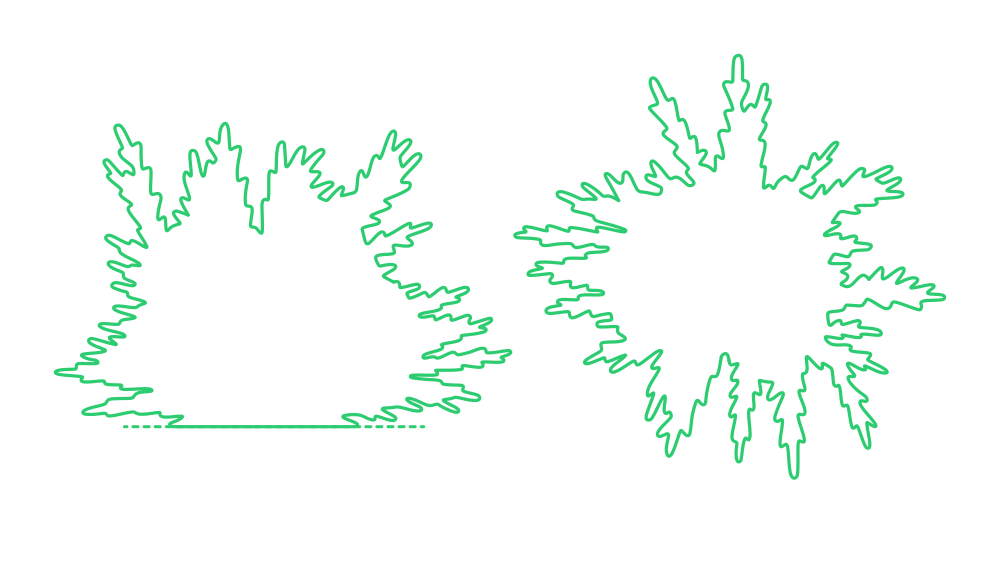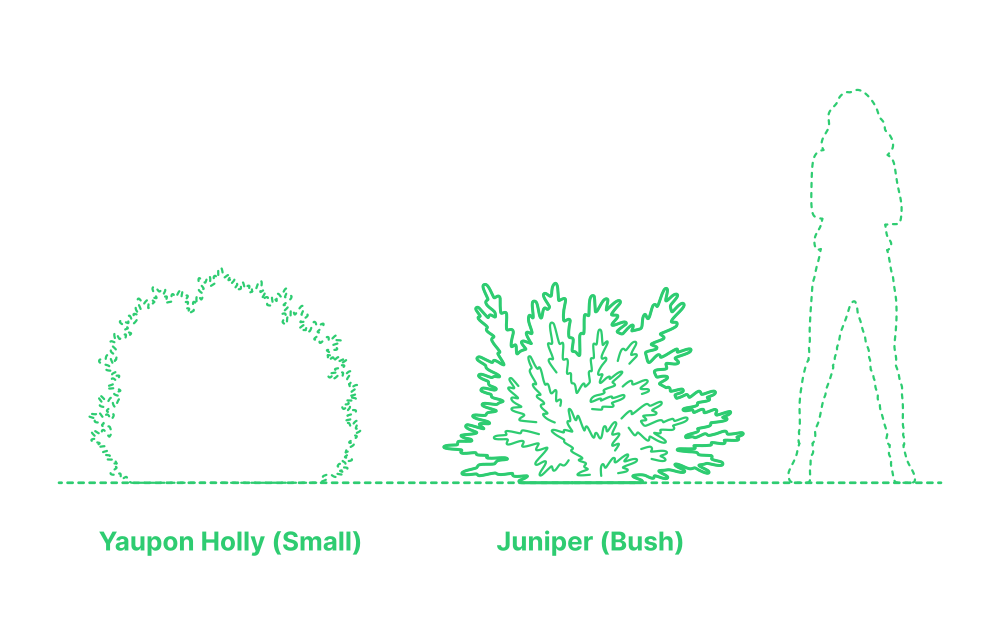
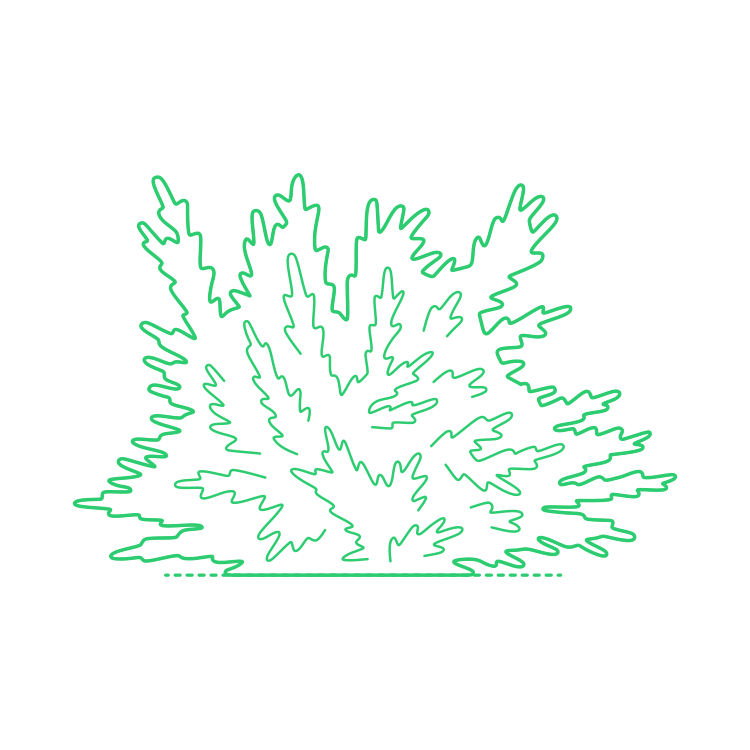
Juniper (Juniperus communis) in a single bush form appears as an individual evergreen shrub with upright branching and dense, needle-like foliage. The stems are woody and irregularly branching, with stiff leaves arranged in clusters that create a textured, spiny surface. The foliage remains present year-round, giving the plant a persistent structural presence.
Native across large parts of Europe, Asia, and North America, Juniperus communis is one of the most widely distributed conifers, inhabiting open slopes, heathlands, and forest clearings. Biologically, the species produces berry-like cones that develop gradually and are important to wildlife. The single form highlights the plant’s rugged architecture and evergreen resilience, emphasizing the individual shrub’s branching complexity and adaptation to varied climates and soils.
Juniper (Bush) has a typical overall cultivated height between 2’-5’ (.61-1.52 m) and spread diameter of 3’-5’ (.91-1.52 m).
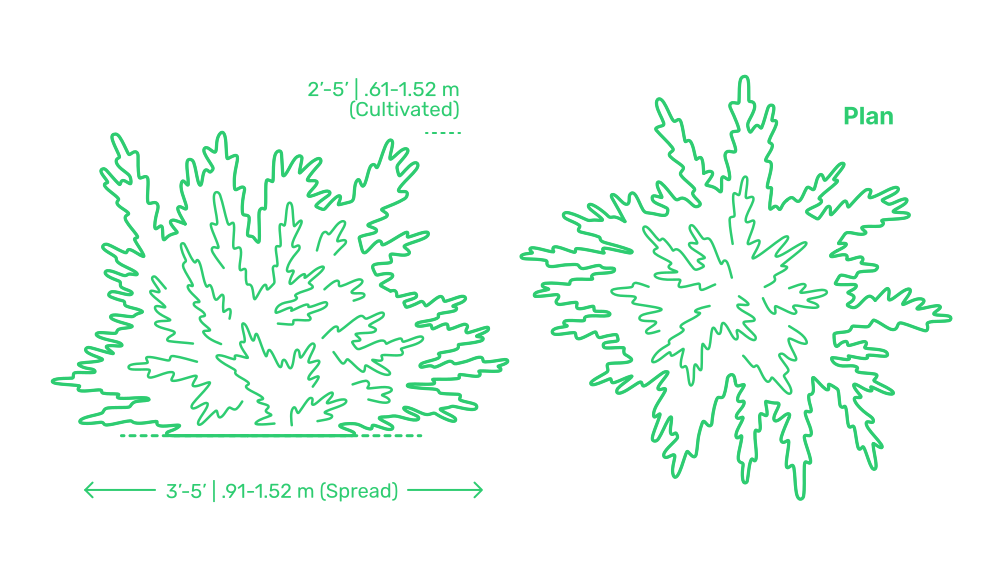
Juniper (Juniperus communis) in a single bush form appears as an individual evergreen shrub with upright branching and dense, needle-like foliage. The stems are woody and irregularly branching, with stiff leaves arranged in clusters that create a textured, spiny surface. The foliage remains present year-round, giving the plant a persistent structural presence.
Native across large parts of Europe, Asia, and North America, Juniperus communis is one of the most widely distributed conifers, inhabiting open slopes, heathlands, and forest clearings. Biologically, the species produces berry-like cones that develop gradually and are important to wildlife. The single form highlights the plant’s rugged architecture and evergreen resilience, emphasizing the individual shrub’s branching complexity and adaptation to varied climates and soils.
Juniper (Bush) has a typical overall cultivated height between 2’-5’ (.61-1.52 m) and spread diameter of 3’-5’ (.91-1.52 m).