The Dromedary Camel, also known as the Arabian Camel, is a one-humped camelid that resides primarily in Northern Africa, with a small feral population in Australia. The Dromedary Camel has not occurred in the wild for about 2,000 years after being domesticated about 4,000 in Arabian Peninsula. The Dromedary Camel is the tallest of all the camel species with a hump that can store up to 80 pounds of fat that can be converted to water in time of need. Due to its ability to store plenty of water reserves, the Dromedary Camel can cover distances of 100 miles in the desert and go several weeks without access to water.
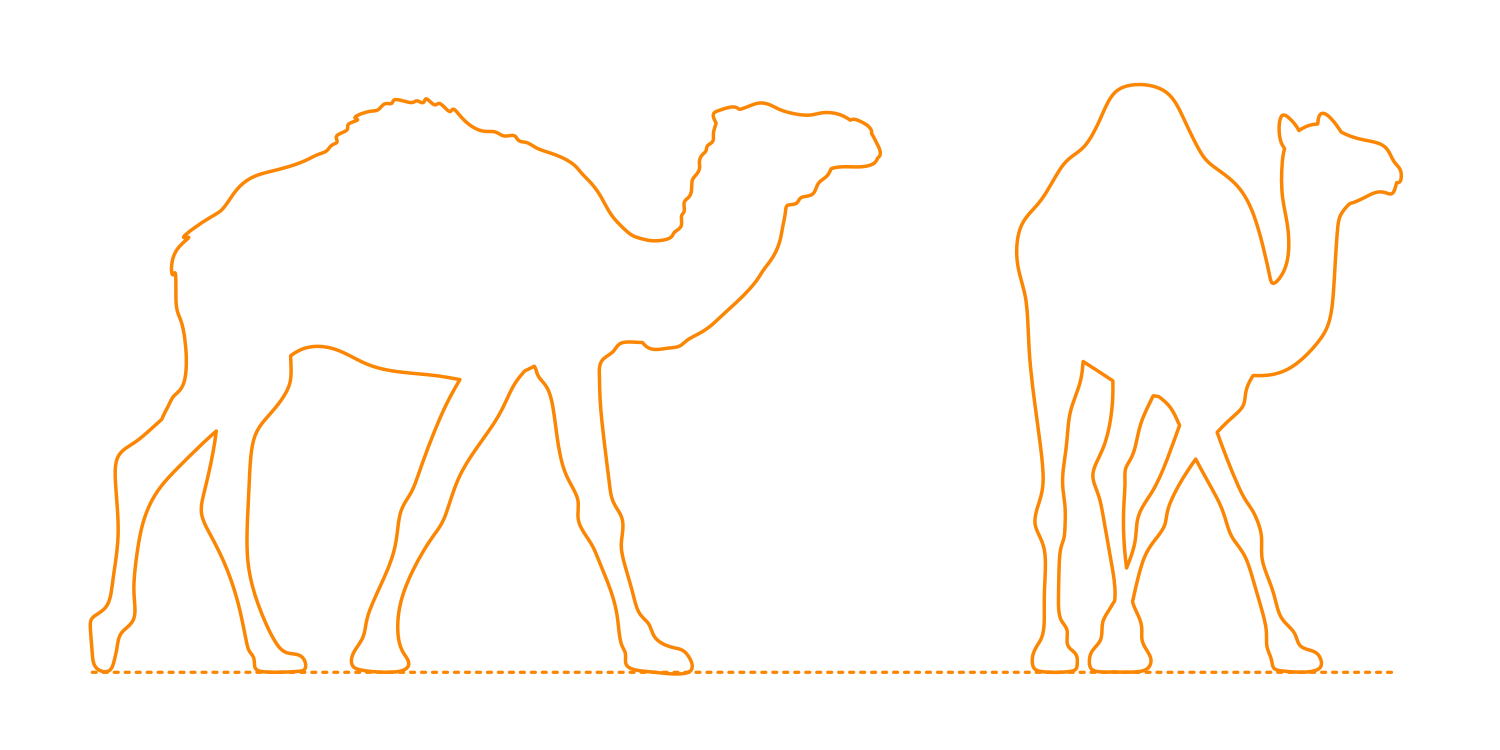
The average Dromedary Camel has an overall height of 84" (7’) (2.13 m), withers height of 71"-78" (5’11”-6’6”) (180-198 cm), and body length of 86"-134" (7’2”-11’2”) (219-341 cm). A typical Dromedary Camel weighs between 880-1320 lb (400-600 kg) and has a lifespan of roughly 40-50 years.

The Dromedary Camel, also known as the Arabian Camel, is a one-humped camelid that resides primarily in Northern Africa, with a small feral population in Australia. The Dromedary Camel has not occurred in the wild for about 2,000 years after being domesticated about 4,000 in Arabian Peninsula. The Dromedary Camel is the tallest of all the camel species with a hump that can store up to 80 pounds of fat that can be converted to water in time of need. Due to its ability to store plenty of water reserves, the Dromedary Camel can cover distances of 100 miles in the desert and go several weeks without access to water.
The average Dromedary Camel has an overall height of 84" (7’) (2.13 m), withers height of 71"-78" (5’11”-6’6”) (180-198 cm), and body length of 86"-134" (7’2”-11’2”) (219-341 cm). A typical Dromedary Camel weighs between 880-1320 lb (400-600 kg) and has a lifespan of roughly 40-50 years.