Llamas are domesticated herbivorous members of the camel family (camelids) characterized by their coats of thick wool and their upright posture. An iconic traditional South American animal, llamas have long been kept as useful beasts of burden that serve human needs for transportation of goods as well as for the production of wool and meat. Llamas live collectively with others in herds and are often used as guardians for other livestock because of their keen awareness and intelligence. Often confused with the alpaca, llamas are noticeably larger than alpacas and produce less wool.
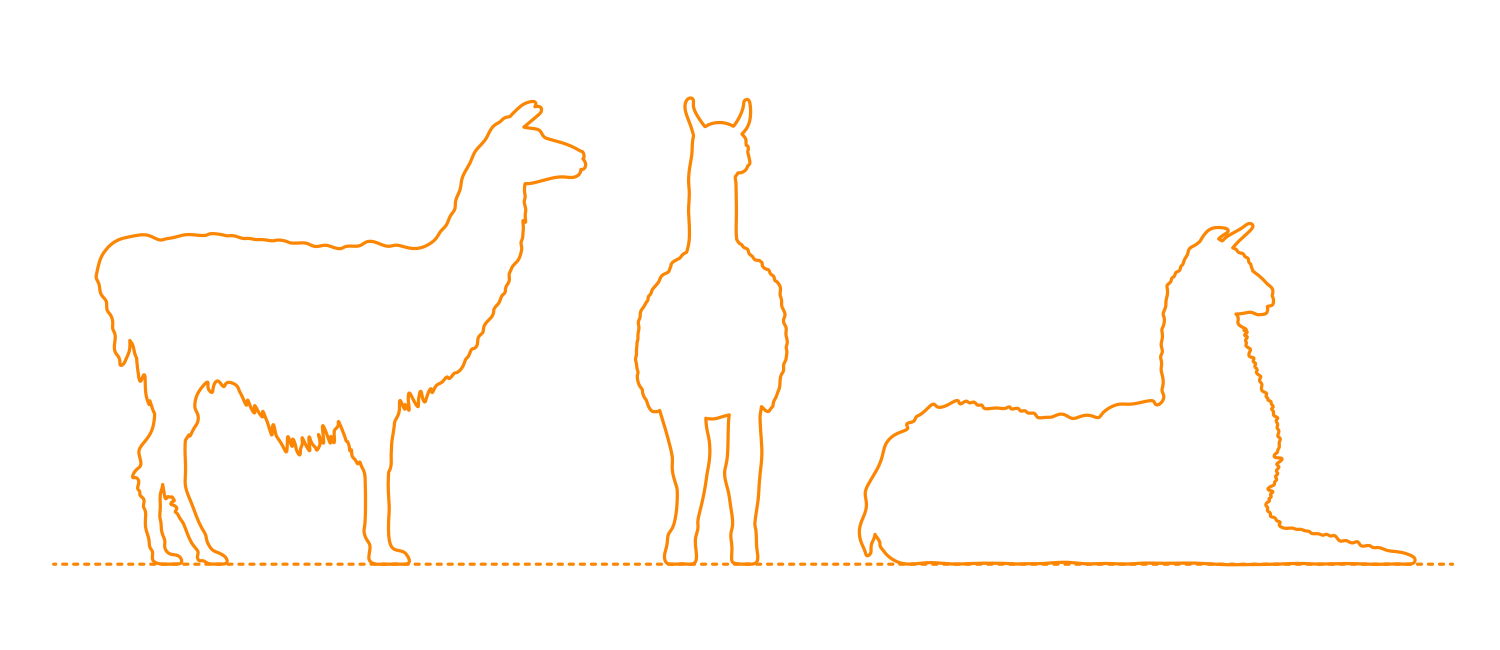
The average Llama has an overall height of 67"-71" (5’7”-5’11”) (1.7-1.8 m), withers (shoulder) height of 48"-53" (4’-4’5”) (1.2-1.3 m), and body length of 72"-78" (6’-6’6”) (1.8-2.0 m). A typical Llama weighs between 290-440 lb (130-200 kg) and has a lifespan of roughly 15-25 years.

Llamas are domesticated herbivorous members of the camel family (camelids) characterized by their coats of thick wool and their upright posture. An iconic traditional South American animal, llamas have long been kept as useful beasts of burden that serve human needs for transportation of goods as well as for the production of wool and meat. Llamas live collectively with others in herds and are often used as guardians for other livestock because of their keen awareness and intelligence. Often confused with the alpaca, llamas are noticeably larger than alpacas and produce less wool.
The average Llama has an overall height of 67"-71" (5’7”-5’11”) (1.7-1.8 m), withers (shoulder) height of 48"-53" (4’-4’5”) (1.2-1.3 m), and body length of 72"-78" (6’-6’6”) (1.8-2.0 m). A typical Llama weighs between 290-440 lb (130-200 kg) and has a lifespan of roughly 15-25 years.