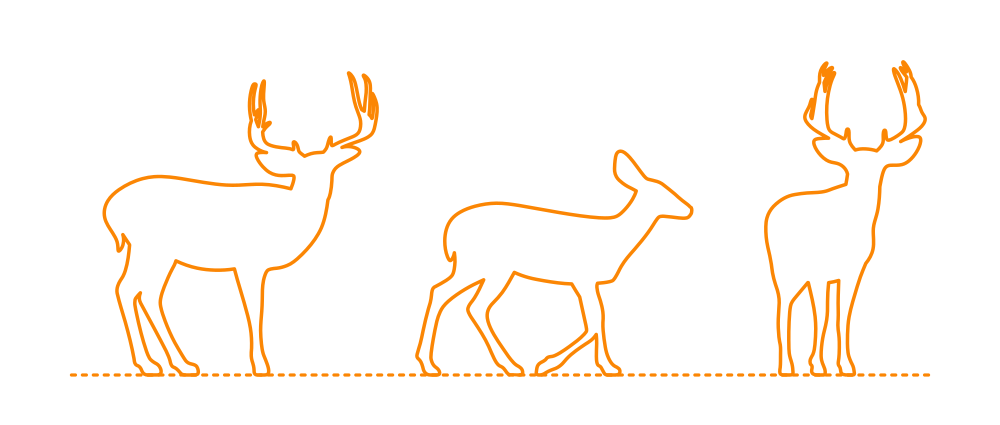
The Mule Deer (Odocoileus hemionus) is deer species indigenous to western North America and is named for its large eyes that resemble those of a mule. Mule Deer’s are mainly found throughout the western Great Plains, the Rocky Mountains, the southwest United States, and North America's West Coast. Argentina and Kauai, Hawaii were also introduced to the Mule Deer.
Often compared to the White-Tailed Deer, the most notable distinctions between them are that the Mule Deer has larger ears, black-tipped tail color instead of white, and antlers that become "forks" when they grow instead of being branched off a single main beam.
Mule Deer have standing shoulder heights between 2’8”-3’6” (81-107 cm), head-to-body lengths in the range of 3’7”-5’6” (109-168 cm), and overall weights of 99-330 lb (45-150 kg). The lifespan of a wild Mule Deer is roughly 15-22 years.

The Mule Deer (Odocoileus hemionus) is deer species indigenous to western North America and is named for its large eyes that resemble those of a mule. Mule Deer’s are mainly found throughout the western Great Plains, the Rocky Mountains, the southwest United States, and North America's West Coast. Argentina and Kauai, Hawaii were also introduced to the Mule Deer.
Often compared to the White-Tailed Deer, the most notable distinctions between them are that the Mule Deer has larger ears, black-tipped tail color instead of white, and antlers that become "forks" when they grow instead of being branched off a single main beam.
Mule Deer have standing shoulder heights between 2’8”-3’6” (81-107 cm), head-to-body lengths in the range of 3’7”-5’6” (109-168 cm), and overall weights of 99-330 lb (45-150 kg). The lifespan of a wild Mule Deer is roughly 15-22 years.