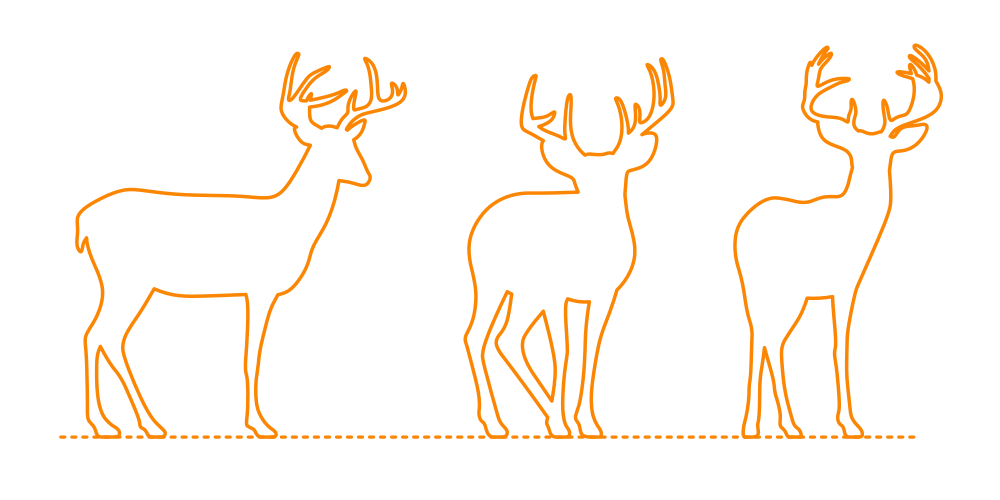
White-Tailed Deer (Odocoileus virginianus), also known as Virginia deer, is a common American deer species that ranges from the Arctic Circle in western Canada to Ecuador, Peru, and Bolivia. The White-Tailed Deer is named for the thick white fur on the underside of the neck and the rear while the rest of their coat is reddish in the summer and a dull gray in the winter.
The hair of the White-Tailed Deer is flared during flight, and their tail resembles a signaling flag. While White-Tailed Deer from North and South America are generally accepted as one group, genetically these deer are farther apart than White-Tailed and Black-Tailed Deer in North America.
White-Tailed Deer have standing shoulder heights between 2'8"-3' (81-91 cm), head-to-body lengths in the range of 3’1”-7’2” (95-220 cm), and overall weights of 80-250 lb (36-113 kg). The lifespan of a wild White-Tailed Deer is roughly 6-15 years.

White-Tailed Deer (Odocoileus virginianus), also known as Virginia deer, is a common American deer species that ranges from the Arctic Circle in western Canada to Ecuador, Peru, and Bolivia. The White-Tailed Deer is named for the thick white fur on the underside of the neck and the rear while the rest of their coat is reddish in the summer and a dull gray in the winter.
The hair of the White-Tailed Deer is flared during flight, and their tail resembles a signaling flag. While White-Tailed Deer from North and South America are generally accepted as one group, genetically these deer are farther apart than White-Tailed and Black-Tailed Deer in North America.
White-Tailed Deer have standing shoulder heights between 2'8"-3' (81-91 cm), head-to-body lengths in the range of 3’1”-7’2” (95-220 cm), and overall weights of 80-250 lb (36-113 kg). The lifespan of a wild White-Tailed Deer is roughly 6-15 years.