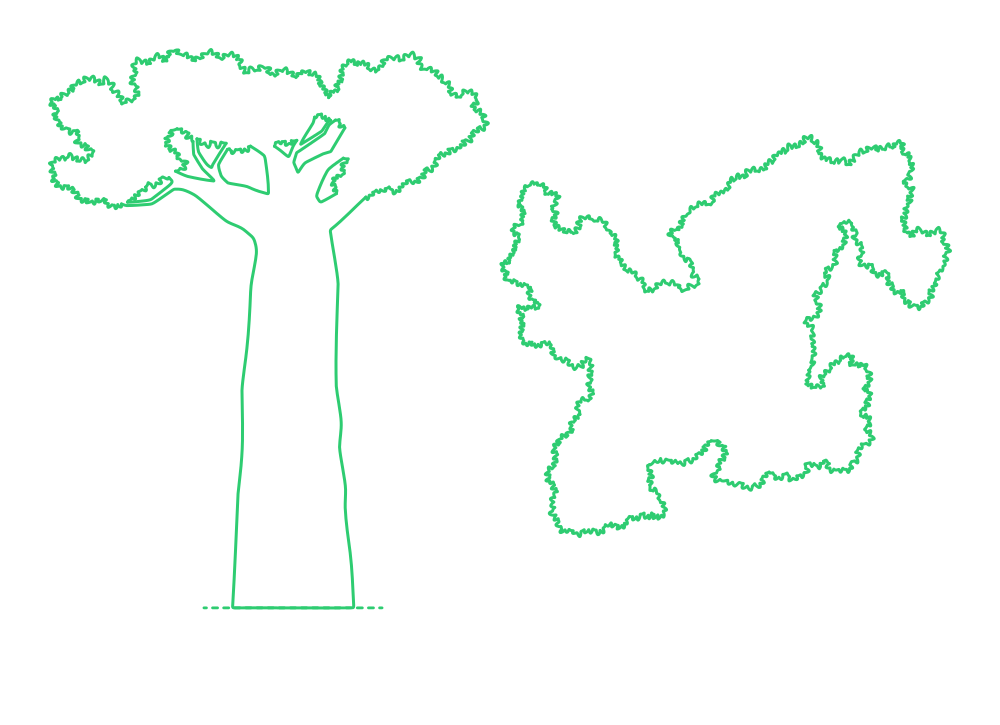
Madagascan Baobab (Adansonia madagascariensis)
Madagascan Baobab (Adansonia madagascariensis)
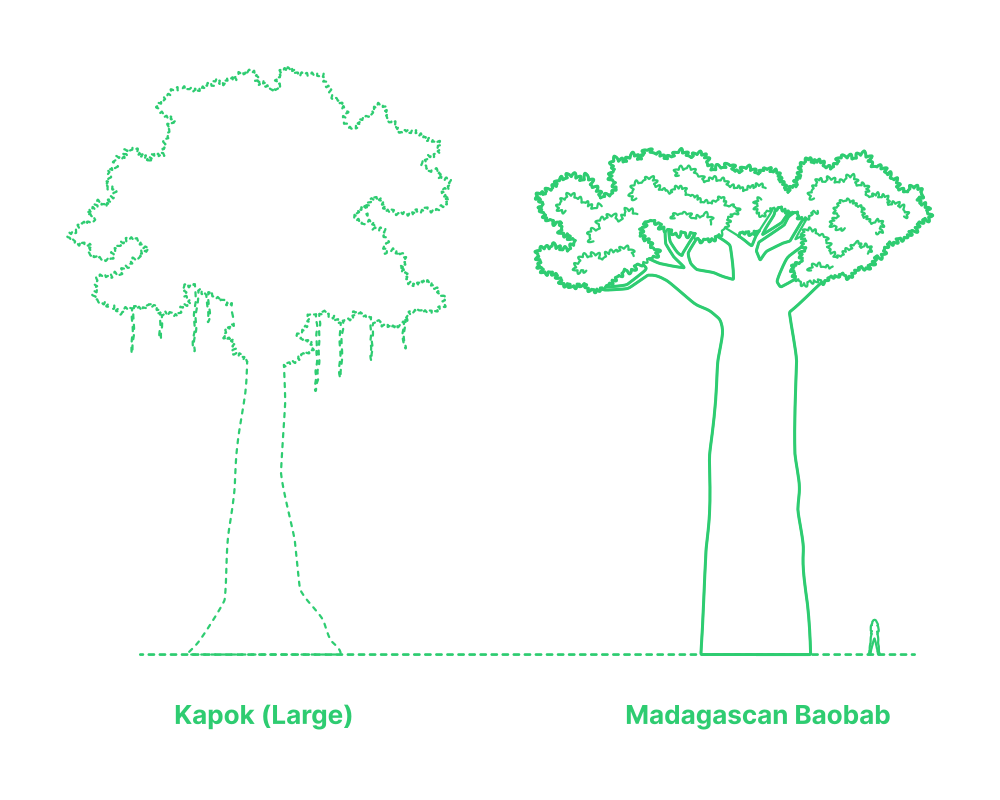
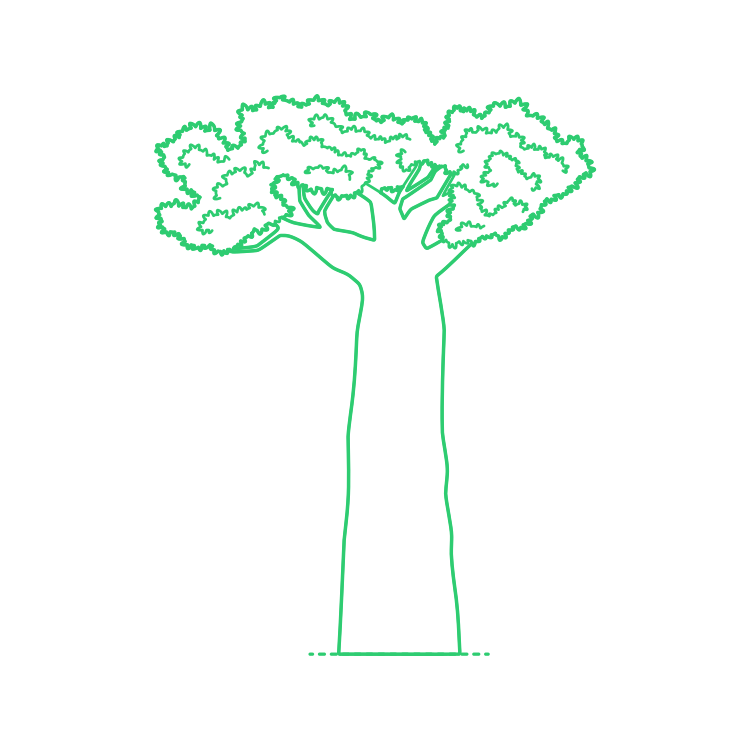
Madagascan baobab (Adansonia madagascariensis) is a striking deciduous tree distinguished by its swollen water-storing trunk, irregular branching crown, and highly sculptural silhouette. The trunk is thick and cylindrical to bulbous, serving as a reservoir for moisture in the seasonally dry habitats of Madagascar. Branches extend from the upper crown in coarse, irregular patterns, often appearing stark and root-like during leafless periods.
Leaves are palmately compound and seasonally deciduous, emerging during wetter cycles. Native exclusively to Madagascar, Adansonia madagascariensis inhabits dry forests and transitional landscapes with pronounced climatic variation. Biologically, the species is notable for extreme drought adaptation, ecological specialization, and geographic isolation within one of the world’s most unique floristic regions. Compared to African baobabs, this species often presents a narrower but equally dramatic trunk and more regionally specialized structural character, emphasizing rarity, resilience, and monumental dryland architecture.
Madagascan Baobab has a typical overall height between 60’-100’ (18.29-30.48 m) and spread diameter of 40’-60’ (12.19-18.29 m). The leaves have a typical length between 3”-4” (8-10 cm).
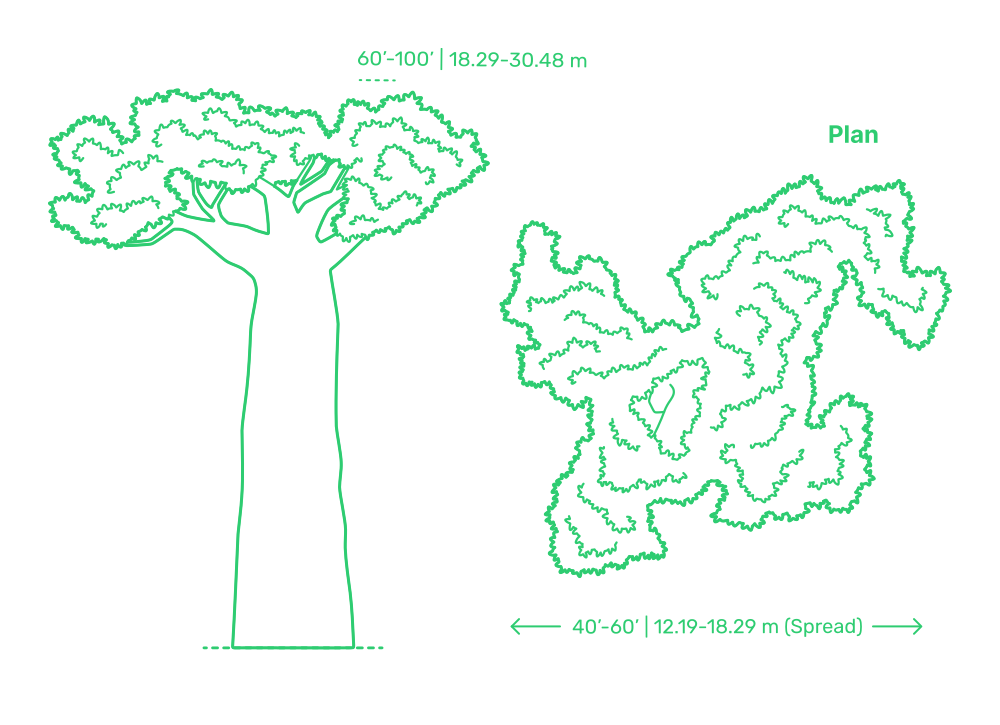
Madagascan baobab (Adansonia madagascariensis) is a striking deciduous tree distinguished by its swollen water-storing trunk, irregular branching crown, and highly sculptural silhouette. The trunk is thick and cylindrical to bulbous, serving as a reservoir for moisture in the seasonally dry habitats of Madagascar. Branches extend from the upper crown in coarse, irregular patterns, often appearing stark and root-like during leafless periods.
Leaves are palmately compound and seasonally deciduous, emerging during wetter cycles. Native exclusively to Madagascar, Adansonia madagascariensis inhabits dry forests and transitional landscapes with pronounced climatic variation. Biologically, the species is notable for extreme drought adaptation, ecological specialization, and geographic isolation within one of the world’s most unique floristic regions. Compared to African baobabs, this species often presents a narrower but equally dramatic trunk and more regionally specialized structural character, emphasizing rarity, resilience, and monumental dryland architecture.
Madagascan Baobab has a typical overall height between 60’-100’ (18.29-30.48 m) and spread diameter of 40’-60’ (12.19-18.29 m). The leaves have a typical length between 3”-4” (8-10 cm).