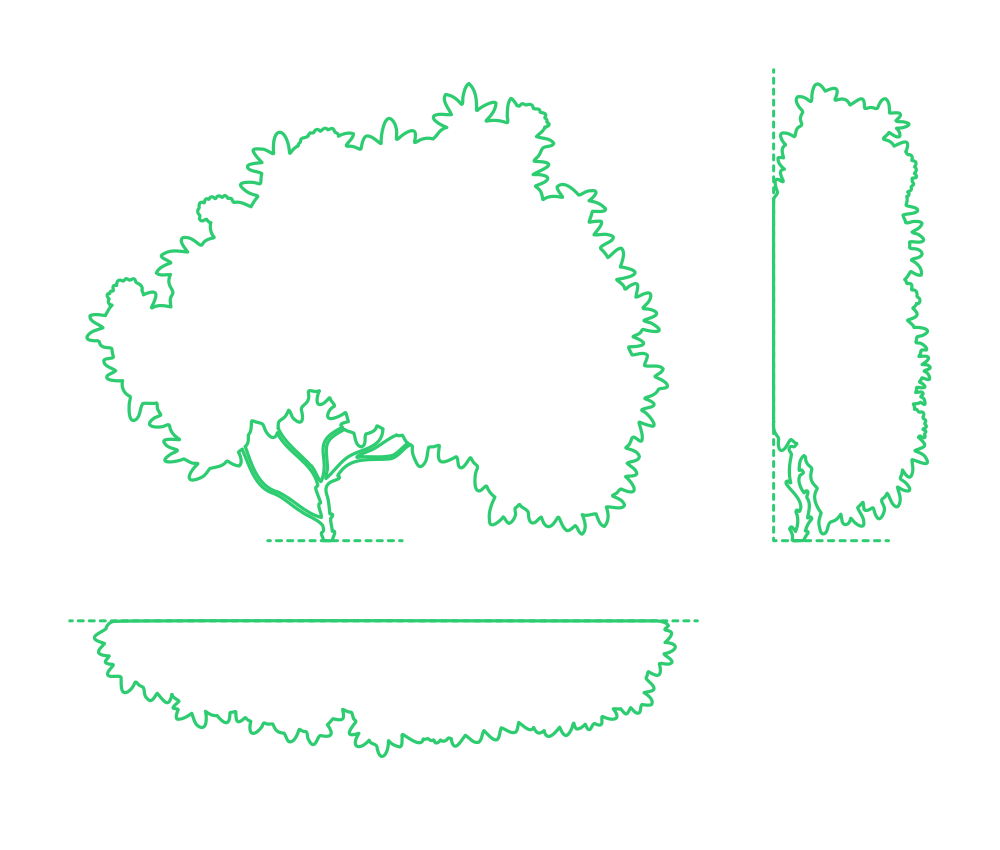
Climbing Hydrangea (Large) (Hydrangea anomala)
Climbing Hydrangea (Large) (Hydrangea anomala)
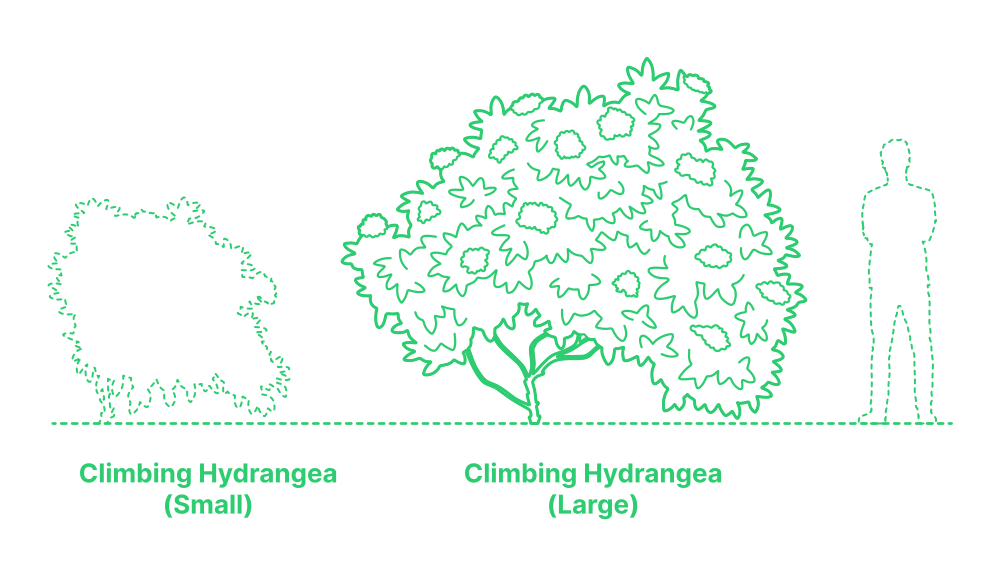
Climbing hydrangea (Hydrangea anomala) in a large form develops as a mature woody vine with thick, branching stems that attach closely to vertical surfaces. The plant produces broad, oval leaves with a slightly serrated edge, arranged oppositely along the stems and forming a dense, layered canopy. A defining feature is its aerial rootlets, which allow the vine to adhere firmly to walls, tree trunks, and rock surfaces.
Large, flat-topped clusters of small flowers emerge seasonally, often surrounded by larger sterile florets that create a lace-like appearance. Native to East Asia, particularly Japan, Korea, and parts of China, Hydrangea anomala inhabits forest margins and shaded woodland environments. Biologically, the species is adapted to slow initial growth followed by strong vertical expansion. In its large form, it emphasizes structural attachment, dense foliage, and broad surface coverage as a mature climbing vine.
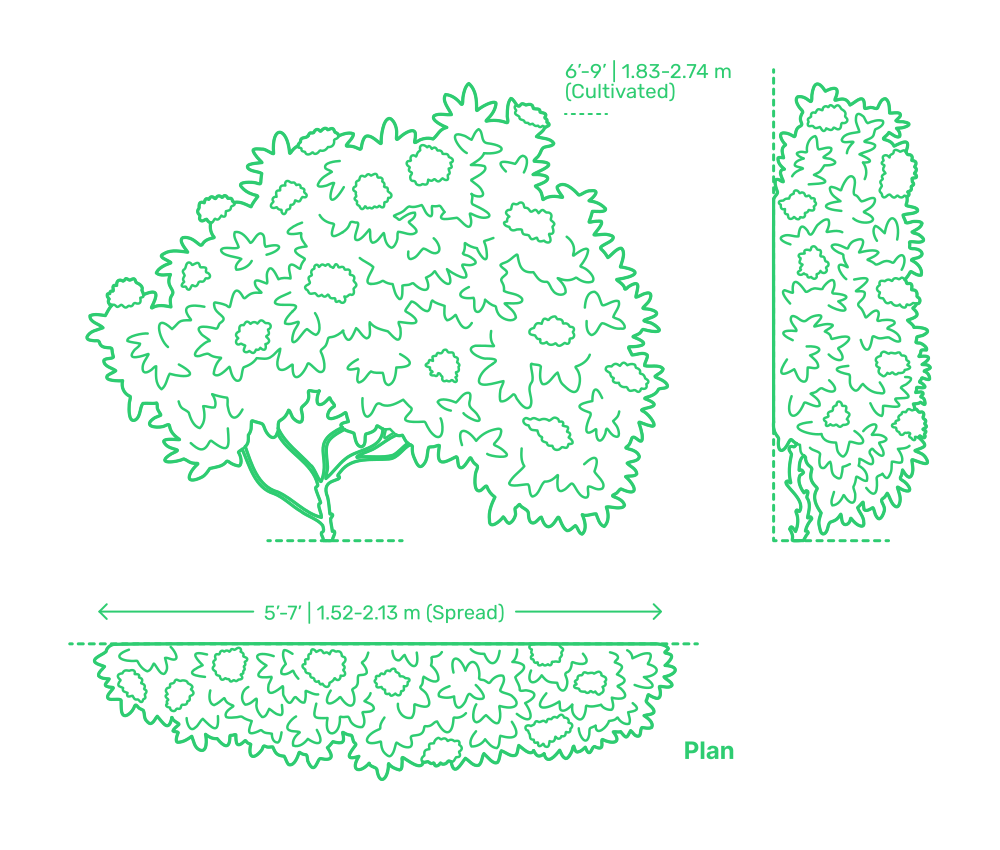
Climbing Hydrangea (Large) has a typical cultivated vine length/height between 6’-9’ (1.83-2.74 m) and spread of 5’-7’ (1.52-2.13 m). The leaf length is between 2”-5” (5-13 cm).
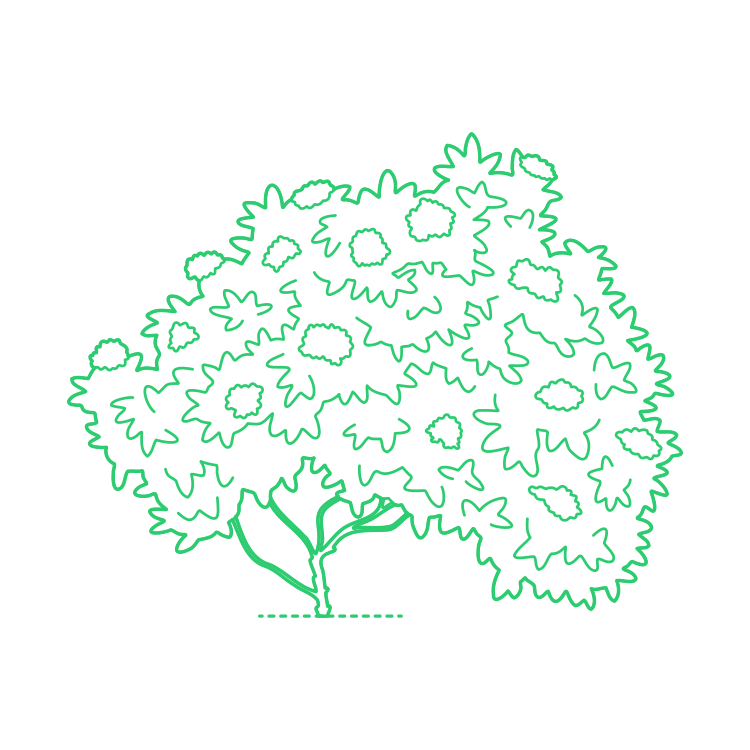
Climbing hydrangea (Hydrangea anomala) in a large form develops as a mature woody vine with thick, branching stems that attach closely to vertical surfaces. The plant produces broad, oval leaves with a slightly serrated edge, arranged oppositely along the stems and forming a dense, layered canopy. A defining feature is its aerial rootlets, which allow the vine to adhere firmly to walls, tree trunks, and rock surfaces.
Large, flat-topped clusters of small flowers emerge seasonally, often surrounded by larger sterile florets that create a lace-like appearance. Native to East Asia, particularly Japan, Korea, and parts of China, Hydrangea anomala inhabits forest margins and shaded woodland environments. Biologically, the species is adapted to slow initial growth followed by strong vertical expansion. In its large form, it emphasizes structural attachment, dense foliage, and broad surface coverage as a mature climbing vine.
Climbing Hydrangea (Large) has a typical cultivated vine length/height between 6’-9’ (1.83-2.74 m) and spread of 5’-7’ (1.52-2.13 m). The leaf length is between 2”-5” (5-13 cm).