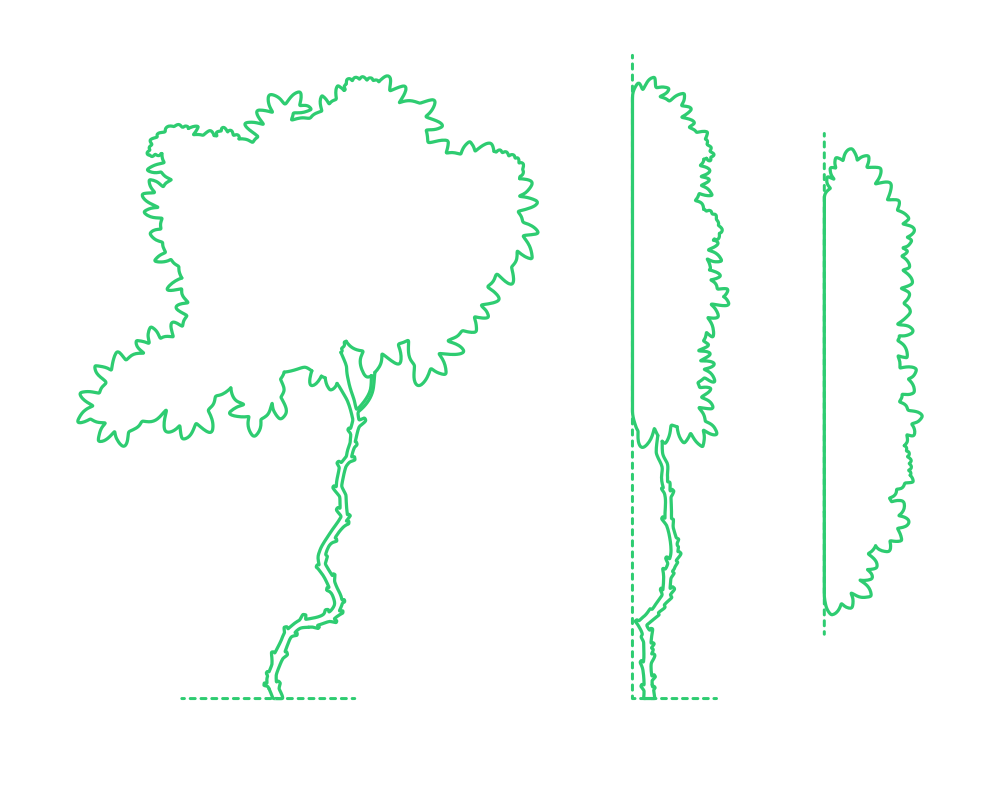
Climbing Hydrangea (Medium, Wild) (Hydrangea anomala)
Climbing Hydrangea (Medium, Wild) (Hydrangea anomala)
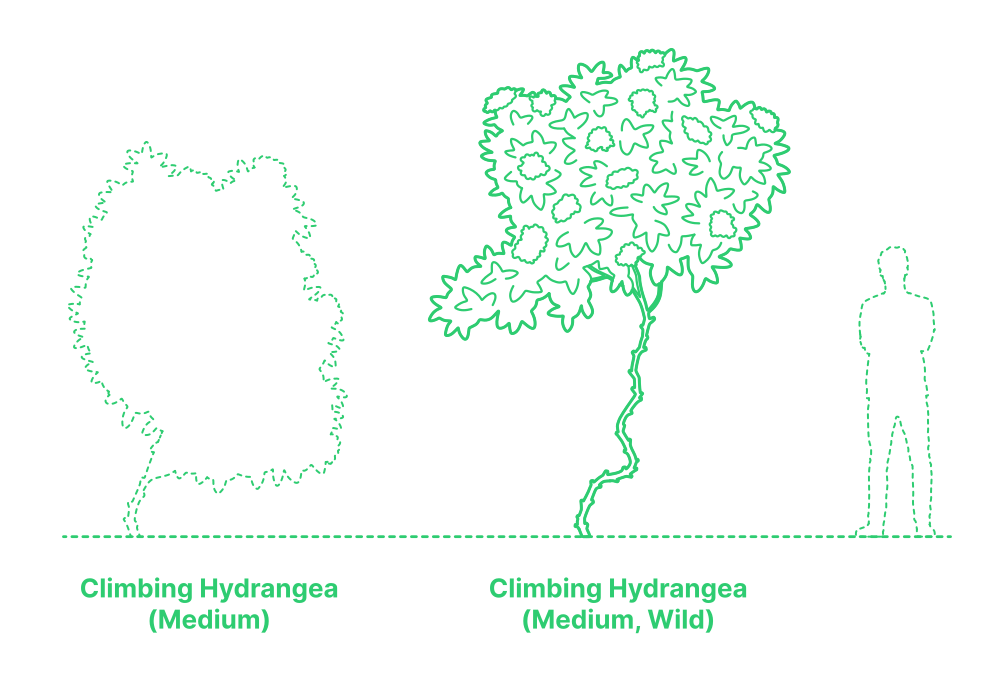
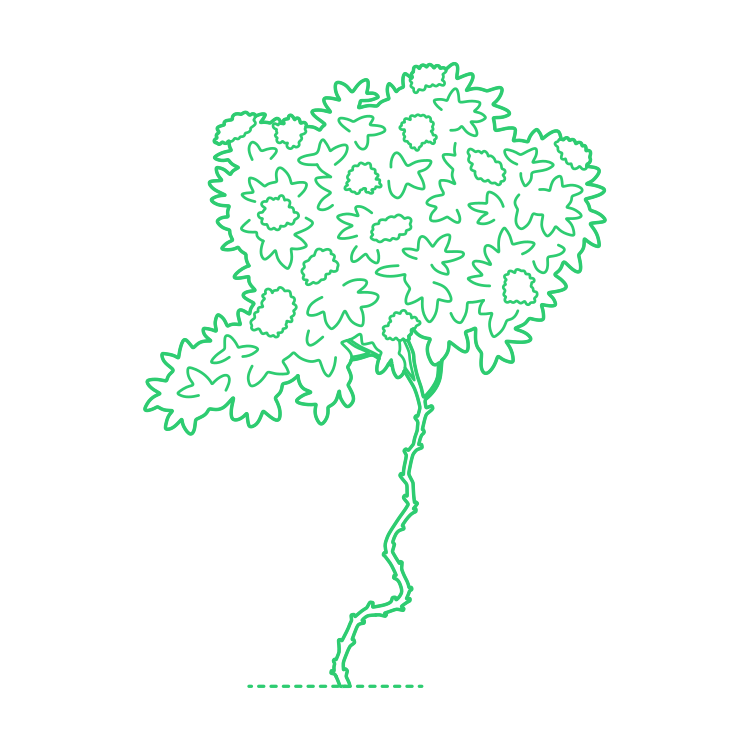
Climbing hydrangea (Hydrangea anomala) in a medium wild form develops as a woody vine with irregular, thick stems that extend unpredictably across surfaces. The primary stems become coarse and substantial, supporting secondary branches that diverge in multiple directions rather than forming a uniform climbing pattern. Leaves are broad, oval, and oppositely arranged, appearing in uneven clusters along the stems and creating a layered but non-uniform canopy.
Aerial rootlets form intermittently, attaching the vine to rough surfaces while allowing portions to project outward. Native to East Asia, Hydrangea anomala inhabits forest margins and shaded woodland environments where it climbs trees and rock faces in a dispersed manner. The species is biologically notable for its slow initial growth followed by structural thickening and expansion. In this wild form, the plant emphasizes irregular branching, variable attachment, and a more natural, unstructured climbing habit.
Climbing Hydrangea (Medium, Wild) has a typical cultivated vine length/height between 5’-8’ (1.52-2.44 m) and spread of 4’-6’ (1.22-1.83 m). The leaf length is between 2”-5” (5-13 cm).
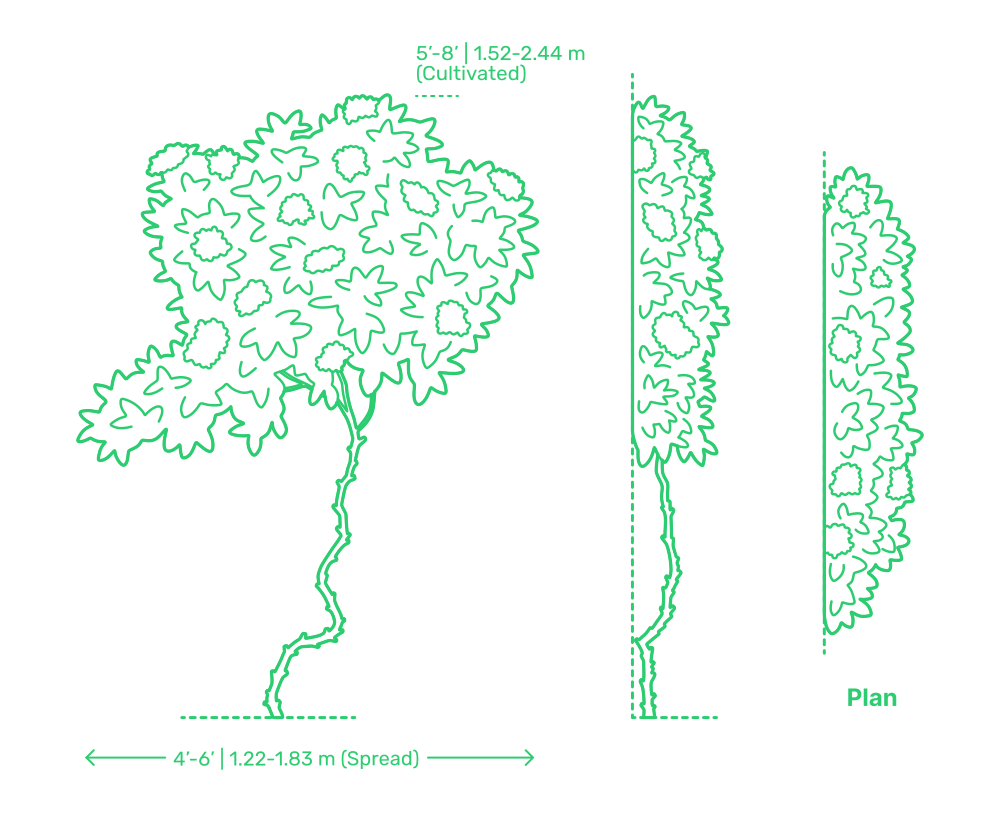
Climbing hydrangea (Hydrangea anomala) in a medium wild form develops as a woody vine with irregular, thick stems that extend unpredictably across surfaces. The primary stems become coarse and substantial, supporting secondary branches that diverge in multiple directions rather than forming a uniform climbing pattern. Leaves are broad, oval, and oppositely arranged, appearing in uneven clusters along the stems and creating a layered but non-uniform canopy.
Aerial rootlets form intermittently, attaching the vine to rough surfaces while allowing portions to project outward. Native to East Asia, Hydrangea anomala inhabits forest margins and shaded woodland environments where it climbs trees and rock faces in a dispersed manner. The species is biologically notable for its slow initial growth followed by structural thickening and expansion. In this wild form, the plant emphasizes irregular branching, variable attachment, and a more natural, unstructured climbing habit.
Climbing Hydrangea (Medium, Wild) has a typical cultivated vine length/height between 5’-8’ (1.52-2.44 m) and spread of 4’-6’ (1.22-1.83 m). The leaf length is between 2”-5” (5-13 cm).