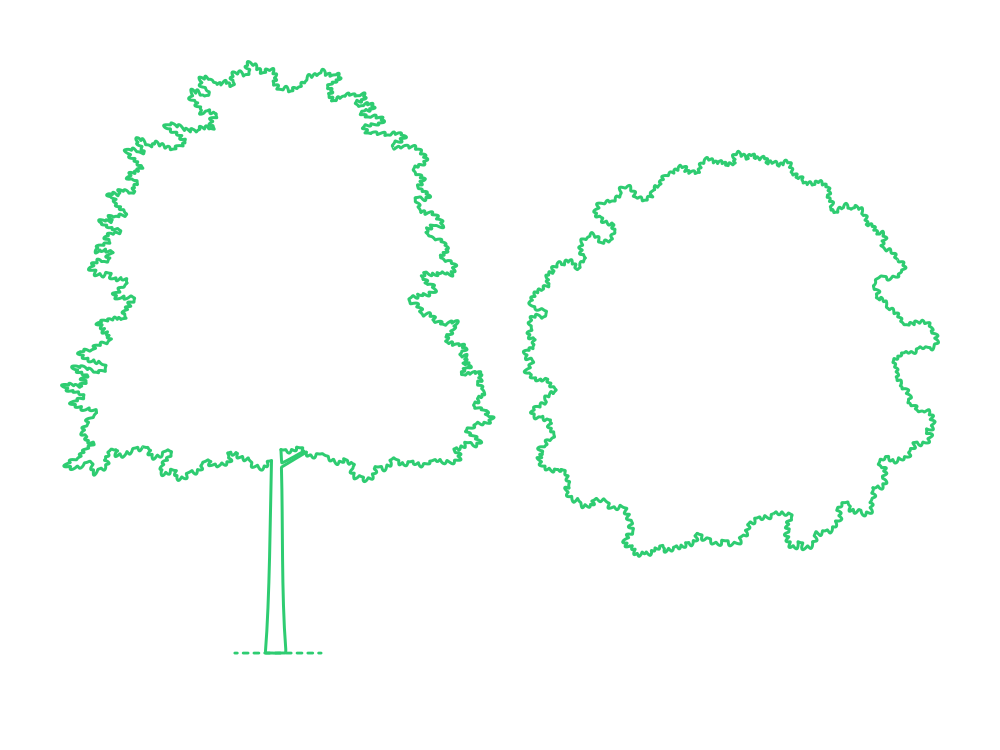
American Linden (Large) (Tilia americana)
American Linden (Large) (Tilia americana)
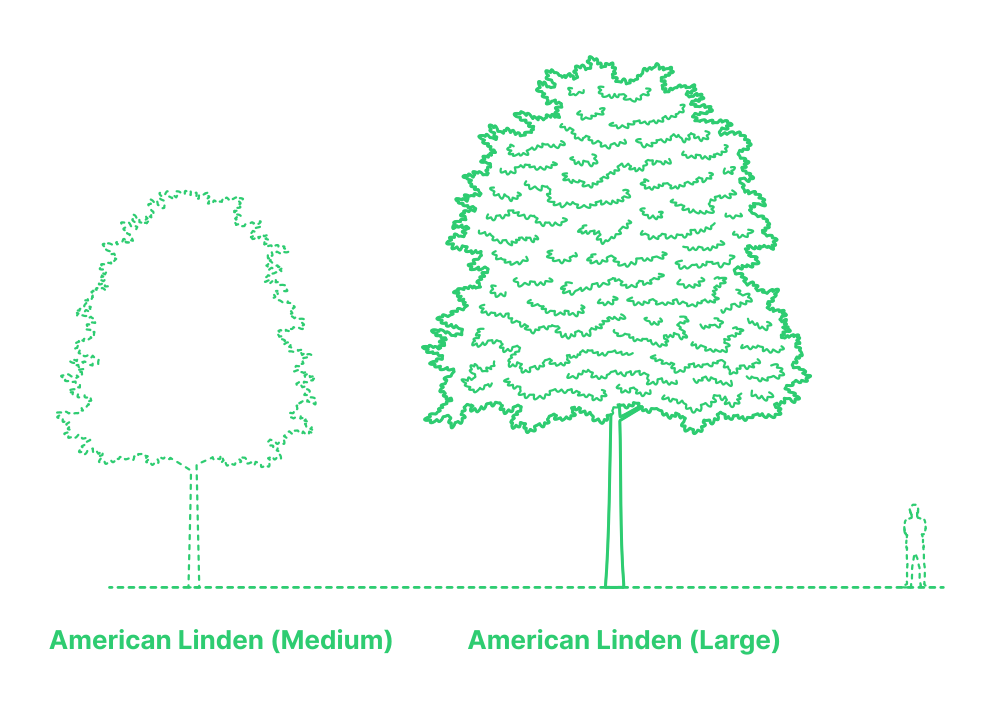

American linden (Tilia americana), also known as basswood, in a large form is a stately deciduous tree defined by its tall trunk, expansive rounded canopy, and broad heart-shaped foliage. Strong upright limbs branch outward into a dense crown, producing layered masses of serrated leaves that create deep seasonal shade. The bark is gray and furrowed with maturity, contrasting with the soft green foliage.
Native to eastern North America, Tilia americana commonly inhabits rich deciduous forests, river valleys, and fertile woodland slopes. The species is biologically notable for its fragrant flowers, which are highly attractive to pollinators, particularly bees. In large form, the tree emphasizes canopy breadth, vertical stature, and refined deciduous massing, making it one of the most prominent broadleaf forest trees in temperate North America. Its combination of ecological importance, floral productivity, and large-scale architectural presence distinguishes it among deciduous canopy trees.
American Linden (Large) has a typical cultivated height between 35’-50’ (10.67-15.24 m) and spread diameter of 15’-30’ (4.57-9.14 m). The leaves have a typical length between 3”-8” (8-20 cm).
American linden (Tilia americana), also known as basswood, in a large form is a stately deciduous tree defined by its tall trunk, expansive rounded canopy, and broad heart-shaped foliage. Strong upright limbs branch outward into a dense crown, producing layered masses of serrated leaves that create deep seasonal shade. The bark is gray and furrowed with maturity, contrasting with the soft green foliage.
Native to eastern North America, Tilia americana commonly inhabits rich deciduous forests, river valleys, and fertile woodland slopes. The species is biologically notable for its fragrant flowers, which are highly attractive to pollinators, particularly bees. In large form, the tree emphasizes canopy breadth, vertical stature, and refined deciduous massing, making it one of the most prominent broadleaf forest trees in temperate North America. Its combination of ecological importance, floral productivity, and large-scale architectural presence distinguishes it among deciduous canopy trees.
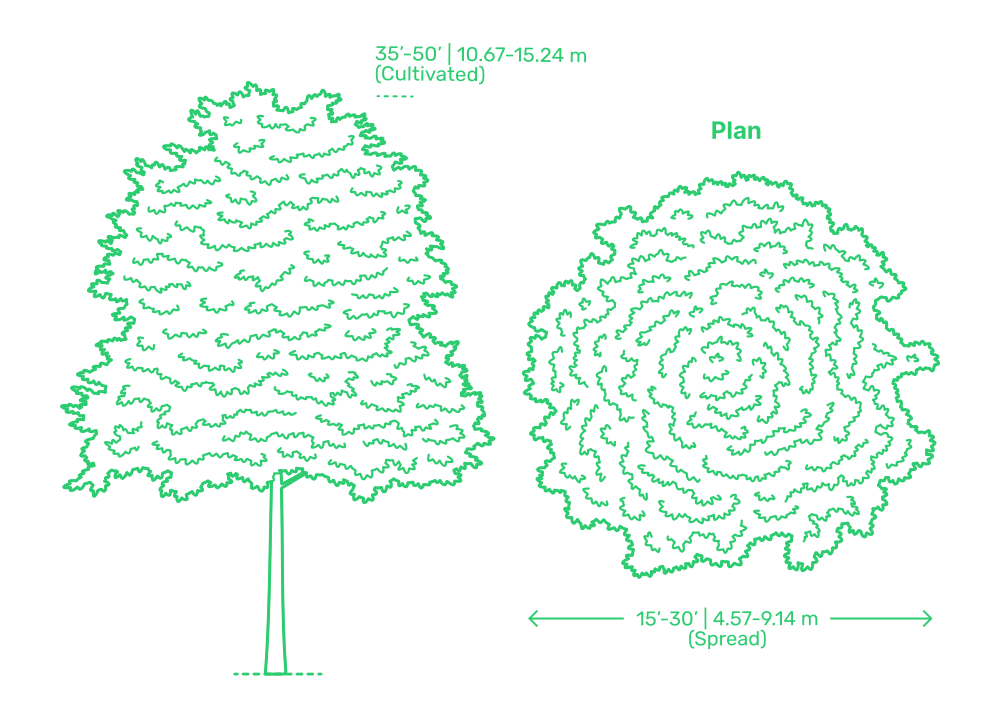
American Linden (Large) has a typical cultivated height between 35’-50’ (10.67-15.24 m) and spread diameter of 15’-30’ (4.57-9.14 m). The leaves have a typical length between 3”-8” (8-20 cm).